

Keeping Up with EMDR, the Brain, and Neurobiology: From Brain Parts to Brain Networks
Bridger, Jen and Caleb bring us up to date on the evolving world of neurobiology and how EMDR therapist can apply this new knowledge.
Read More
Treating Shame with EMDR: Practical Strategies for Therapists
EMDRIA member Skye Ross dives into Phases 1-4 with a shame focus and discusses the importance of using compassion and attachment EMDR focused therapy when working with shame.
Read More
The integration of culture, identity, and belongingness in EMDR therapy: Practitioners’ perspectives (Lesley University, 2026)
Using a qualitative narrative research design guided by intersectional feminist epistemology, this study investigates how privilege, positionality, and belongingness influence clinicians’ approaches to EMDR therapy.
Read More
Trauma-focused psychological interventions for psychosis: Meta-analytic evidence of differential effects on delusions and hallucinations (Psychological Medicine)
This systematic review and meta-analysis evaluated the effects of trauma-focused interventions (TFI)s (CBT, EMDR) on psychosis-related outcomes in individuals with psychotic disorders or subclinical symptoms.
Read More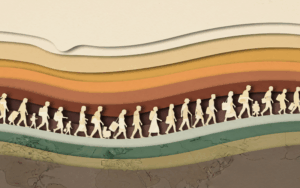
The Political Nervous System: EMDR, Migration, and Mental Health in a Time of Fear
Liliana Baylon, EMDRIA member, encourages EMDR therapists to reflect on how to attune to clients affected by shifting political views on immigration.
Read More
Predictors and process moderators of EMDR therapy for depressive symptoms: Protocol for a series of observational N-of-1 trials (Frontiers in Psychology)
This study aims to present a protocol for evaluating factors associated with EMDR therapy effectiveness for depressive symptoms in real-world clinical settings.
Read More
Group EMDR therapy for disaster-affected adolescents: Evaluating effectiveness and navigating implementation challenges in PTSD, depression, and anxiety (Frontiers in Psychiatry)
This study evaluated the effectiveness of EMDR group therapy on adolescents affected by the February 6 earthquakes in Hatay, Turkey.
Read More
Psychedelic Assisted EMDR Therapy GWT Magazine® Issue
EMDRIA Member Katja Cahoon’s article “EMDR and Psychedelic-Assisted Therapy: A Match Made in Heaven?” is featured from the Fall 2025 Go With That Magazine® issue on the intersection of EMDR therapy and psychedelics.
Read More
In the News: December 26, 2025
EMDRIA members and EMDR therapy are featured in various articles and interviews. Learn more in this edition of In the News.
Read More
Therapists’ attitudes and exclusion criteria for prolonged exposure and EMDR in patients with eating disorders and PTSD (European Eating Disorders Review)
A significant proportion of patients with eating disorders (EDs) also meet criteria for posttraumatic stress disorder (PTSD). Guidelines recommend exposure-based treatments for PTSD, including prolonged exposure (PE) and eye movement desensitisation and reprocessing (EMDR). Investigating therapist-related factors could lead to improve their use when ED and PTSD co-occur.
Read More
Enhancing trauma-focused therapy (EMDR) with imagery rescripting for childhood abuse-related PTSD: A case study (European Journal of Psychotraumatology)
This case report demonstrates the effectiveness of integrating Imagery Rescripting (ImRs) into standard EMDR treatment for PTSD when progress stalls.
Read More
EMDRIA Members Respond: Overcoming Biggest Fears When Becoming an EMDR Therapist
To honor the process of becoming that is inevitable in learning new skills and therapies, we invited EMDRIA members to share their biggest fears and hurdles when learning EMDR therapy and how they overcame those fears.
Read More