

Inclusion of sexual- and gender-minoritized individuals in randomized clinical trials of first-line treatments for posttraumatic stress disorder: A systematic literature review (Journal of Traumatic Stress)
A systematic literature review to examine the frequency with which sexual and gender minoritized (SGM) adults were enrolled in RCTs of CPT, PE, and EMDR and investigate these interventions’ efficacy in reducing PTSD symptoms among SGM adults.
Feasibility of intensive eye movement desensitization and reprocessing therapy for adults with mild intellectual disability or borderline intellectual functioning and posttraumatic stress disorder in a tertiary mental health care setting: A nonconcurrent single-case design (Journal of Mental Health Research in Intellectual Disabilities)
Intensive EMDR appears feasible, safe, and potentially effective for adults with mild intellectual and borderline intellectual functioning (MID-BIF) and PTSD in tertiary care.
It is not the shimmy, it is the shift: Differential effects of valence shift type and stimulation mode during a simulated EMDR session in PTSD patients and healthy controls (Health Sciences – Preprint)
Mechanism-of-action studies on EMDR have so far focused mainly on the presumed active component of bilateral stimulation (BLS). In this pilot study, a further potential working mechanism was examined for the first time, involving stimulation-induced changes in emotional valence.
Childbirth related post-traumatic stress disorder and childbirth trauma: A systematic review of available primary antenatal intervention (Birth Issues in Perinatal Care)
The aim of this study was to conduct a systematic review of the literature and empirical evidence to identify antenatal interventions and their effectiveness for treatment of childbirth trauma related PTSD symptomology.

Treating Shame with EMDR: Practical Strategies for Therapists
EMDRIA member Skye Ross dives into Phases 1-4 with a shame focus and discusses the importance of using compassion and attachment EMDR focused therapy when working with shame.

The integration of culture, identity, and belongingness in EMDR therapy: Practitioners’ perspectives (Lesley University, 2026)
Using a qualitative narrative research design guided by intersectional feminist epistemology, this study investigates how privilege, positionality, and belongingness influence clinicians’ approaches to EMDR therapy.

Testing Wong’s theory on the flash technique with published timing data for healthy subjects (Journal of EMDR Practice and Research)
This study uses currently available timing data on spontaneous blinking to examine mechanisms of action for the flash technique (FT) in healthy subjects.
Trauma-focused psychological interventions for psychosis: Meta-analytic evidence of differential effects on delusions and hallucinations (Psychological Medicine)
This systematic review and meta-analysis evaluated the effects of trauma-focused interventions (TFI)s (CBT, EMDR) on psychosis-related outcomes in individuals with psychotic disorders or subclinical symptoms.
Exploring inter-subject variability in the emotional domain to characterize typical and atypical neural responses in longitudinal settings: Insights from eye movement desensitization and reprocessing rehabilitative treatment (Journal of NeuroEngineering and Rehabilitation – Preprint)
This study found that looking at differences between individuals’ brain responses can reveal meaningful brain changes after therapy, showing that EMDR reduced brain variability in people with multiple sclerosis alongside improvements in depression, even when standard analyses showed no change.
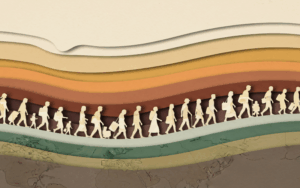
The Political Nervous System: EMDR, Migration, and Mental Health in a Time of Fear
Liliana Baylon, EMDRIA member, encourages EMDR therapists to reflect on how to attune to clients affected by shifting political views on immigration.
Timing and type of posttraumatic stress disorder treatment in patients with co-occurring substance use disorder and posttraumatic stress disorder – a randomized controlled trial (Journal of Substance Use and Addiction Treatment)
This study compared effectiveness of simultaneous versus sequential SUD-PTSD-treatment and compared Prolonged Exposure (PE), EMDR, and Imagery Rescripting (ImRs) head-to-head in patients with co-occurring SUD and PTSD.
Is EMDR an alternative therapy for adolescents with social anxiety disorder? (Clinical Child Psychology and Psychiatry)
This study aimed to examine the effectiveness of Eye Movement Desensitization Therapy (EMDR) in Social Anxiety Disorder (SAD).
