

Integrating control-mastery theory and EMDR in the treatment of attachment-related trauma: Pathogenic beliefs, testing processes, and target selection (Frontiers in Psychology)
This paper proposes a clinical-theoretical integration of Control-Mastery Theory (CMT) and EMDR for the treatment of attachment-related trauma.
Attachment-informed EMDR: Framework and illustrative case study (Counselling & Psychotherapy Research)
This paper provides the conceptual foundations for future clinical investigations of attachment-informed EMDR for complex post-traumatic distress.

Attachment-informed phase 2 resourcing in EMDR therapy: Relational base-of-sceurity RDI and memory-focused imaginal reparenting (Journal of EMDR Practice and Research)
This clinical instruction article examines Phase 2 resource-development procedures by reorganizing elements rather than presenting novel component techniques, clarifying their intended function within the adaptive information processing model.
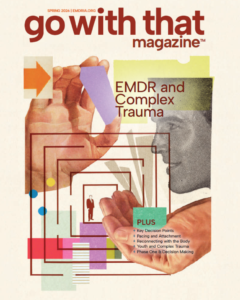
EMDR and Complex Trauma GWT Magazine® Issue
EMDRIA Member Mark Brayne’s article “Complex Trauma: EMDR Pacing and Attachment as Organizing Lens” is featured from the Spring 2026 Go With That Magazine® issue on EMDR and complex trauma.
Complex Trauma: EMDR Pacing and Attachment as Organizing Lens
Explore attachment-informed pacing strategies in EMDR therapy for developmental and complex trauma.

EMDR for Parental Favoritism: Treating Developmental Trauma We Often Miss
EMDRIA member Dr. Antonio D’Costa looks at how parental favoritism can shape attachment patterns through an AIP lens in EMDR therapy.

Healing Cumulative Trauma in Law Enforcement with EMDR Therapy
EMDRIA member Dr. Stacy Raymond discusses the helpful impact EMDR therapy can have with law enforcement and first responders carrying cumulative trauma.
Potential uses of AI in EMDR practice (EMDR Therapy Quarterly, Winter 2026)
This article explores potential uses for AI in EMDR therapy and the importance of keeping client needs centered when considering suitability.

Contain The Case: Conceptualization from Neuroscience, Through an Anti-Racist Lens
An EMDR case conceptualization framework integrating neuroscience, containment, and anti‑racist, culturally responsive practice.

Transmission of attachment patterns from parents to children (Psychwire, 2026)
This book explores EMDR therapy and attachment patterns.
A grounded theory of attachment processes in EMDR for psychosis (European Journal of Trauma & Dissociation)
This research sought to identify processes between attachment and EMDR that might promote recovery from psychosis.

EMDR in the treatment of the spectrum of eating disorders (Oxford University Press, 2026)
This chapter describes the impact of painful life events (trauma), both large and small, on the development and entrenchment of eating disorders, and EMDR as a cornerstone of the therapeutic component of treatment
