Skip to content
EMDR International Association
  • About EMDR Therapy
    • Learn more about EMDR
      Therapy

      Find an EMDR Therapist®

      What is EMDR Therapy

      AIP Model

      AIP Model

      Experiencing EMDR Therapy

      Experiencing EMDR Therapy

      EMDR in Treatment Guidelines

      EMDR in Treatment Guidelines

      Recent Research

      Recent Research

      Uses for EMDR

      Addiction

      Addiction

      Anxiety

      Anxiety

      Childhood Trauma

      Childhood Trauma

      Depression

      Depression

      PTSD

      PTSD

  • About EMDR Therapy
    • What is EMDR therapy?
      • AIP Model
      • Experiencing EMDR Therapy
      • EMDR in Treatment Guidelines
      • Recent Research
    • Uses in EMDR
      • Addiction
      • Anxiety
      • Childhood Trauma
      • Depression
      • PTSD
    • Find an EMDR Therapist®
  • Training & Events
    • EMDRIA™ Training and
      Events

      EMDRIA™ Conference
      EMDRIA™ Virtual Summit

      EMDR Basic Training

      Eligibility Requirements

      Eligibility Requirements

      5 Steps to EMDR Training

      5 Steps to EMDR Training

      EMDR Basic Training FAQs

      EMDR Basic Training FAQs

      Training vs Certification

      Training vs Certification

      Find EMDR Basic Training

      Find EMDR Basic Training

      EMDR Education Calendar

      Consultant / Trainer Events

      EMDRIA OnDemand Education

  • Training & Events
    • EMDR Basic Training
      • Eligibility Requirements
      • 5 Steps to EMDR Training
      • EMDR Basic Training FAQs
      • Training vs Certification
      • Find an EMDR Basic Training
    • EMDR Education Calendar
    • Consultant / Trainer Events
    • EMDRIA OnDemand Education
    • EMDRIA Conference
    • EMDRIA Summit
    • EMDRIA Digital Badges
    • Consultant / Trainer Events
    • Apply: Certified Therapist
    • Apply: Approved Consultant
    • Apply: Approved Trainer
  • Credentialing
    • Puzzle

      Credentialing

      Apply: Certified Therapist
      Apply: Approved Consultant
      Apply: Approved Trainer

      EMDRIA Certified Therapist™

      Membership vs Certification

      Membership vs Certification

      Certification FAQs

      Certification FAQs

      Certified Therapist Renewal

      Certified Therapist Renewal

      EMDRIA Approved Consultant™

      Updating Consultant Standards

      Updating Consultant Standards

      CIT Declaration Form

      CIT Declaration Form

      Consultant-in-Training FAQs

      Consultant-in-Training FAQs

      Approved Consultant Renewal

      Approved Consultant Renewal

      EMDRIA Approved Trainer™

      EMDR Basic Training Standards

      EMDR Basic Training Standards

      Training Policies & Requirements

      Training Policies & Requirements

      EMDRIA Credit Providers

      Program Application & Guidelines

      Program Application & Guidelines

      EMDRIA Credit FAQs

      EMDRIA Credit FAQs

      EMDRIA Digital Badges

      Consultant / Trainer Events

  • Credentialing
    • EMDRIA Certified Therapist™
      • Membership vs Certification
      • Certified FAQs
      • Certified Therapist Renewal
    • EMDRIA Approved Consultant™
      • Updating Consultant Standards
      • CIT Declaration Form
      • Consultant in Training FAQs
      • Approved Consultant Renewal
    • EMDRIA Approved Trainer™
      • EMDR Basic Training Standards
      • Training Policies & Requirements
    • EMDRIA Credit Providers
      • Program Application & Guidelines
      • EMDRIA Credit FAQs
  • Publications & Resources
    • Publications & Resources

      Search the EMDRIA Library
      Subscribe to our Blog

      Journal of EMDR Practice & Research®

      Go With That Magazine®

      Focal Point Blog

      Let's Talk EMDR Podcast

      EMDRIA Library

      Glossary of EMDR Terms

      Glossary of EMDR Terms

      Online EMDR Therapy Resources

      Online EMDR Therapy Resources

      Antiracism Resources

      Antiracism Resources

      Toolkits & Practice Resources

      Toolkits & Practice Resources

      Español: Recursos en Español

      Español: Recursos en Español

  • Publications & Resources
    • Journal of EMDR Practice & Research®
    • Go With That Magazine®
    • Focal Point Blog
    • Let’s Talk EMDR Podcast
    • EMDRIA Library
      • Glossary of EMDR Terms
      • Online EMDR Therapy Resources
      • Antiracism Resources
      • Toolkits & Practice Resources
      • Español: Recursos en Español
    • Search the EMDRIA Library
    • Subscribe to Focal Point Blog
  • Membership
    • Users_Group

      Membership

      Member Hub
      EMDRIA Member Connect

      Join EMDRIA

      Benefits of Membership

      Benefits of Membership

      Membership vs Certification

      Membership vs Certification

      Agency Group Membership

      Agency Group Membership

      International Affiliates

      International Affiliates

      Members Only

      Account Overview

      Account Overview

      Directory Profile Information

      Directory Profile Information

      Renew Membership

      Renew Membership

      Retired Membership

      Retired Membership

  • Membership
    • Join EMDRIA™
      • Benefits of Membership
      • Membership vs Certification
      • Agency Group Membership
      • International Affiliates
    • Members Only
      • Account Overview
      • Directory Profile Information
      • Renew Membership
      • Retired Membership
    • Member Hub
    • EMDRIA Member Connect
  • About EMDRIA™
    • Circle_Help

      About EMDRIA™

      EMDRIA Foundation

      About Us

      EMDRIA 30th Anniversary

      EMDRIA 30th Anniversary

      Policies & Code of Conduct

      Policies & Code of Conduct

      EMDRIA Awards & Winners

      EMDRIA Awards & Winners

      EMDRIA FAQs

      EMDRIA FAQs

      Meet the Board of Directors

      Board News and Updates

      Board News and Updates

      Contact Media Relations

      Contact EMDRIA

  • About EMDRIA™
    • About EMDRIA™
      • EMDRIA’s 30th Anniversary
      • Policies & Code of Conduct
      • EMDRIA Awards & Winners
      • EMDRIA FAQs
    • Meet the Board of Directors
      • Board News and Updates
    • Contact Media Relations
    • Contact EMDRIA
    • EMDRIA Foundation
FacebookTwitterLinkedinInstagramWordpress
  • Join EMDRIA™
  • Contact
  • Find an EMDR Therapist®
EMDR International Association
Log In
  • About EMDR Therapy
    • Learn more about EMDR
      Therapy

      Find an EMDR Therapist®

      What is EMDR Therapy

      AIP Model

      AIP Model

      Experiencing EMDR Therapy

      Experiencing EMDR Therapy

      EMDR in Treatment Guidelines

      EMDR in Treatment Guidelines

      Recent Research

      Recent Research

      Uses for EMDR

      Addiction

      Addiction

      Anxiety

      Anxiety

      Childhood Trauma

      Childhood Trauma

      Depression

      Depression

      PTSD

      PTSD

  • About EMDR Therapy
    • What is EMDR therapy?
      • AIP Model
      • Experiencing EMDR Therapy
      • EMDR in Treatment Guidelines
      • Recent Research
    • Uses in EMDR
      • Addiction
      • Anxiety
      • Childhood Trauma
      • Depression
      • PTSD
    • Find an EMDR Therapist®
  • Training & Events
    • EMDRIA™ Training and
      Events

      EMDRIA™ Conference
      EMDRIA™ Virtual Summit

      EMDR Basic Training

      Eligibility Requirements

      Eligibility Requirements

      5 Steps to EMDR Training

      5 Steps to EMDR Training

      EMDR Basic Training FAQs

      EMDR Basic Training FAQs

      Training vs Certification

      Training vs Certification

      Find EMDR Basic Training

      Find EMDR Basic Training

      EMDR Education Calendar

      Consultant / Trainer Events

      EMDRIA OnDemand Education

  • Training & Events
    • EMDR Basic Training
      • Eligibility Requirements
      • 5 Steps to EMDR Training
      • EMDR Basic Training FAQs
      • Training vs Certification
      • Find an EMDR Basic Training
    • EMDR Education Calendar
    • Consultant / Trainer Events
    • EMDRIA OnDemand Education
    • EMDRIA Conference
    • EMDRIA Summit
    • EMDRIA Digital Badges
    • Consultant / Trainer Events
    • Apply: Certified Therapist
    • Apply: Approved Consultant
    • Apply: Approved Trainer
  • Credentialing
    • Puzzle

      Credentialing

      Apply: Certified Therapist
      Apply: Approved Consultant
      Apply: Approved Trainer

      EMDRIA Certified Therapist™

      Membership vs Certification

      Membership vs Certification

      Certification FAQs

      Certification FAQs

      Certified Therapist Renewal

      Certified Therapist Renewal

      EMDRIA Approved Consultant™

      Updating Consultant Standards

      Updating Consultant Standards

      CIT Declaration Form

      CIT Declaration Form

      Consultant-in-Training FAQs

      Consultant-in-Training FAQs

      Approved Consultant Renewal

      Approved Consultant Renewal

      EMDRIA Approved Trainer™

      EMDR Basic Training Standards

      EMDR Basic Training Standards

      Training Policies & Requirements

      Training Policies & Requirements

      EMDRIA Credit Providers

      Program Application & Guidelines

      Program Application & Guidelines

      EMDRIA Credit FAQs

      EMDRIA Credit FAQs

      EMDRIA Digital Badges

      Consultant / Trainer Events

  • Credentialing
    • EMDRIA Certified Therapist™
      • Membership vs Certification
      • Certified FAQs
      • Certified Therapist Renewal
    • EMDRIA Approved Consultant™
      • Updating Consultant Standards
      • CIT Declaration Form
      • Consultant in Training FAQs
      • Approved Consultant Renewal
    • EMDRIA Approved Trainer™
      • EMDR Basic Training Standards
      • Training Policies & Requirements
    • EMDRIA Credit Providers
      • Program Application & Guidelines
      • EMDRIA Credit FAQs
  • Publications & Resources
    • Publications & Resources

      Search the EMDRIA Library
      Subscribe to our Blog

      Journal of EMDR Practice & Research®

      Go With That Magazine®

      Focal Point Blog

      Let's Talk EMDR Podcast

      EMDRIA Library

      Glossary of EMDR Terms

      Glossary of EMDR Terms

      Online EMDR Therapy Resources

      Online EMDR Therapy Resources

      Antiracism Resources

      Antiracism Resources

      Toolkits & Practice Resources

      Toolkits & Practice Resources

      Español: Recursos en Español

      Español: Recursos en Español

  • Publications & Resources
    • Journal of EMDR Practice & Research®
    • Go With That Magazine®
    • Focal Point Blog
    • Let’s Talk EMDR Podcast
    • EMDRIA Library
      • Glossary of EMDR Terms
      • Online EMDR Therapy Resources
      • Antiracism Resources
      • Toolkits & Practice Resources
      • Español: Recursos en Español
    • Search the EMDRIA Library
    • Subscribe to Focal Point Blog
  • Membership
    • Users_Group

      Membership

      Member Hub
      EMDRIA Member Connect

      Join EMDRIA

      Benefits of Membership

      Benefits of Membership

      Membership vs Certification

      Membership vs Certification

      Agency Group Membership

      Agency Group Membership

      International Affiliates

      International Affiliates

      Members Only

      Account Overview

      Account Overview

      Directory Profile Information

      Directory Profile Information

      Renew Membership

      Renew Membership

      Retired Membership

      Retired Membership

  • Membership
    • Join EMDRIA™
      • Benefits of Membership
      • Membership vs Certification
      • Agency Group Membership
      • International Affiliates
    • Members Only
      • Account Overview
      • Directory Profile Information
      • Renew Membership
      • Retired Membership
    • Member Hub
    • EMDRIA Member Connect
  • About EMDRIA™
    • Circle_Help

      About EMDRIA™

      EMDRIA Foundation

      About Us

      EMDRIA 30th Anniversary

      EMDRIA 30th Anniversary

      Policies & Code of Conduct

      Policies & Code of Conduct

      EMDRIA Awards & Winners

      EMDRIA Awards & Winners

      EMDRIA FAQs

      EMDRIA FAQs

      Meet the Board of Directors

      Board News and Updates

      Board News and Updates

      Contact Media Relations

      Contact EMDRIA

  • About EMDRIA™
    • About EMDRIA™
      • EMDRIA’s 30th Anniversary
      • Policies & Code of Conduct
      • EMDRIA Awards & Winners
      • EMDRIA FAQs
    • Meet the Board of Directors
      • Board News and Updates
    • Contact Media Relations
    • Contact EMDRIA
    • EMDRIA Foundation
Home / Resources / Easy ego state interventions: Strategies for working with parts (Norton, 2016)

Share on social media

Easy ego state interventions: Strategies for working with parts (Norton, 2016)

Easy ego state interventions: Strategies for working with parts

Quick, essential techniques to practice ego state therapy, a popular therapeutic approach.


Book Access

Purchase/Subscription Required

Shapiro, R. (2016). Easy ego state interventions: Strategies for working with parts. W. W. Norton & Co. https://wwnorton.com/books/9780393709278(opens in new tab)

ISBN: 978-0-393-70927-8


About the Book

“Most of us have different aspects, “parts,” or “ego states” of ourselves—the silly and imaginative five-year-old part, for example, or the depressed, anxious, or angry adolescent—which manifest as particular moods, behaviors, and reactions depending on the demands of our external and internal environments. “Ego state therapy” refers to a powerful, flexible therapy that helps clients integrate and reconcile these distinct aspects of themselves.

This book offers a grab bag of ego state interventions—simple, practical techniques for a range of client issues—that any therapist can incorporate in his or her practice. In her characteristic wise, compassionate, and user-friendly writing style, Robin Shapiro explains what ego states are, how to access them in clients, and how to use them for a variety of treatment issues. After covering foundational interventions for accessing positive adult states, creating internal caregivers, and working with infant and child states in Part I: Getting Started With Ego State Work, Shapiro walks readers step-by-step through a variety of specific interventions for specific problems, each ready for immediate application with clients. Part II: Problem-Specific Interventions includes chapters devoted to working with trauma, relationship challenges, personality disorders, suicidal ideation, and more.

Ego state work blends easily, and often seamlessly, with most other modalities. The powerful techniques and interventions in this book can be used alone or combined with other therapies. They are suitable for garden-variety clients with normal developmental issues like self-care challenges, depression, grief, anxiety, and differentiation from families and peer groups. Many of the interventions included in this book are also effective with clients across the dissociation spectrum—dissociation is a condition particularly well suited to ego state work—including clients who suffer trauma and complex trauma. Rich with case examples, this book is both a pragmatic introduction for clinicians who have never before utilized parts work and a trove of proven interventions for experienced hands to add to their therapeutic toolbox. Welcome to a powerful, flexible resource to help even the most difficult clients build a sense of themselves as adult, loveable, worthwhile, and competent”

Table of Contents

Part I: Getting Started with Ego State Work
Chapter 1. Defining and Diagnosing Ego States
Chapter 2. Foundational Intervention: Accessing Positive States
Chapter 3. Foundational Intervention: Creating Safe Places and Internal Caregivers
Chapter 4. Foundational Intervention: Working With Infant and Child States

Part II: Problem-Specific Interventions
Chapter 5. Working With Trauma
Chapter 6. Working With Relationship Challenges
Chapter 7. Working With Personality Disorders
Chapter 8. Working With Suicidal Clients
Chapter 9. Working With Cultural, Familial, and Abuse-Related Introjects.

—Description from publisher

For EMDR Therapists:


  • Ego state interventions can be used to help prepare clients for EMDR processing.
  • Parts work can address blocking beliefs, fears, and dissociative defenses that interfere with EMDR.
  • Robin Shapiro explicitly teaches when to use EMDR, when to use ego state work, and how to integrate the two approaches


About the Editor

“Robin Shapiro, LICSW, is known for her clear, accessible, and practical style in writing, teaching and clinical consultation. She edited and contributed to EMDR Solutions: Pathways to Healing (Norton, 2005) and EMDR Solutions II: Depression, Eating Disorders, Performance & More (2009) and wrote Trauma Treatments Handbook (2010), and Easy Ego State Interventions (2016). She loves her work: writing, presenting about ego states, EMDR topics, and suicide prevention, doing clinical consultation, and thirty-eight years of psychotherapy practice, especially around issues of trauma, anxiety, and attachment.”

—Description from publisher

View the Resource(opens in new tab)
Basic InfoCollapse

Date
February 1, 2016

Creator(s)
Robin Shapiro

Practice & Methods
Blocked Processing, Parts Work

More InfoCollapse

Extent
224 pages

Publisher
Norton Professional Books

APA Citation
Shapiro, R. (2016). Easy ego state interventions: Strategies for working with parts. W. W. Norton & Co. https://wwnorton.com/books/9780393709278

Audience
EMDR Therapists, Other Mental Health Professionals

Language
English

Content Type
Book

Access Type
External Resource
Related Resources

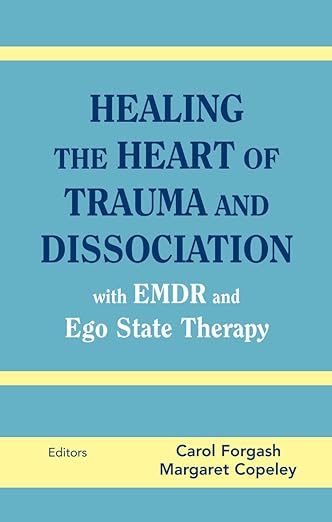
Healing the heart of trauma and dissociation with EMDR and ego state therapy (Springer, 2008)

Read More

EMDR Solutions: Pathways to Healing (W. W. Norton, 2005)

Read More

EMDR Solutions II: For depression, eating disorders, performance, and more (Norton, 2009)

Read More

Find an EMDR Therapist®

EMDRIA™ has more than 18,000 members trained to provide EMDR Therapy. Find a therapist near you.

Find an EMDR Therapist®
d2088683554149097441c3e1f6c13679941fbfdf (1)
EMDRIA

7000 N Mo Pac Expy
Ste 200
Austin, TX 78731-3013

info@emdria.org

512-451-5200

EMDRIA Facebook (opens in new tab) EMDRIA Twitter (opens in new tab) (opens in new tab) EMDRIA LinkedIn (opens in new tab) EMDRIA YouTube (opens in new tab) EMDRIA Online Community (opens in new tab)
  • About EMDR Therapy
  • EMDR Training and Education
  • EMDRIA™ Membership
  • Publications & Resources
  • EMDRIA Member Connect
  • EMDRIA Foundation
  • Privacy Policy
  • Copyright Policy
  • Accessibility Statement
  • Sitemap

© 1995-2026 EMDR International Association™. All rights reserved.

Website by Flipside Group

  • This field is for validation purposes and should be left unchanged.
  • This field is hidden when viewing the form
  • This field is hidden when viewing the form
  • This field is hidden when viewing the form
  • This field is hidden when viewing the form
  • This field is hidden when viewing the form
  • Disclaimer: This form is intended for initial contact with a therapist. Your message is submitted through the EMDRIA website and then sent to the therapist by email. Because email is not a secure method of communication, please consider limiting the amount of detailed personal, health, or confidential information you include in your initial message. Once you've established contact, you and the therapist can determine the most appropriate and secure way to communicate. Please be aware that email delivery cannot be guaranteed, and therapists manage their own inquiries and response times. Sending a message through this form does not guarantee that the therapist will receive, read, or respond to your inquiry. If a phone number is listed on the therapist's profile, you may wish to follow up by phone if you do not receive a response. If you are experiencing an emergency or are in immediate danger, do not use this form. Call 911 or go to your nearest emergency department.
We use cookies to ensure the best website experience. See our privacy policy to learn more.