Skip to content
EMDR International Association
  • About EMDR Therapy
    • Learn more about EMDR
      Therapy

      Find an EMDR Therapist®

      What is EMDR Therapy

      AIP Model

      AIP Model

      Experiencing EMDR Therapy

      Experiencing EMDR Therapy

      EMDR in Treatment Guidelines

      EMDR in Treatment Guidelines

      Recent Research

      Recent Research

      Uses for EMDR

      Addiction

      Addiction

      Anxiety

      Anxiety

      Childhood Trauma

      Childhood Trauma

      Depression

      Depression

      PTSD

      PTSD

  • About EMDR Therapy
    • What is EMDR therapy?
      • AIP Model
      • Experiencing EMDR Therapy
      • EMDR in Treatment Guidelines
      • Recent Research
    • Uses in EMDR
      • Addiction
      • Anxiety
      • Childhood Trauma
      • Depression
      • PTSD
    • Find an EMDR Therapist®
  • Training & Events
    • EMDRIAâ„¢ Training and
      Events

      EMDRIAâ„¢ Conference
      EMDRIAâ„¢ Virtual Summit

      EMDR Basic Training

      Eligibility Requirements

      Eligibility Requirements

      5 Steps to EMDR Training

      5 Steps to EMDR Training

      EMDR Basic Training FAQs

      EMDR Basic Training FAQs

      Training vs Certification

      Training vs Certification

      Find EMDR Basic Training

      Find EMDR Basic Training

      EMDR Education Calendar

      Consultant / Trainer Events

      EMDRIA OnDemand Education

  • Training & Events
    • EMDR Basic Training
      • Eligibility Requirements
      • 5 Steps to EMDR Training
      • EMDR Basic Training FAQs
      • Training vs Certification
      • Find an EMDR Basic Training
    • EMDR Education Calendar
    • Consultant / Trainer Events
    • EMDRIA OnDemand Education
    • EMDRIA Conference
    • EMDRIA Summit
    • EMDRIA Digital Badges
    • Consultant / Trainer Events
    • Apply: Certified Therapist
    • Apply: Approved Consultant
    • Apply: Approved Trainer
  • Credentialing
    • Puzzle

      Credentialing

      Apply: Certified Therapist
      Apply: Approved Consultant
      Apply: Approved Trainer

      EMDRIA Certified Therapistâ„¢

      Membership vs Certification

      Membership vs Certification

      Certification FAQs

      Certification FAQs

      Certified Therapist Renewal

      Certified Therapist Renewal

      EMDRIA Approved Consultantâ„¢

      Updating Consultant Standards

      Updating Consultant Standards

      CIT Declaration Form

      CIT Declaration Form

      Consultant-in-Training FAQs

      Consultant-in-Training FAQs

      Approved Consultant Renewal

      Approved Consultant Renewal

      EMDRIA Approved Trainerâ„¢

      EMDR Basic Training Standards

      EMDR Basic Training Standards

      Training Policies & Requirements

      Training Policies & Requirements

      EMDRIA Credit Providers

      Program Application & Guidelines

      Program Application & Guidelines

      EMDRIA Credit FAQs

      EMDRIA Credit FAQs

      EMDRIA Digital Badges

      Consultant / Trainer Events

  • Credentialing
    • EMDRIA Certified Therapistâ„¢
      • Membership vs Certification
      • Certified FAQs
      • Certified Therapist Renewal
    • EMDRIA Approved Consultantâ„¢
      • Updating Consultant Standards
      • CIT Declaration Form
      • Consultant in Training FAQs
      • Approved Consultant Renewal
    • EMDRIA Approved Trainerâ„¢
      • EMDR Basic Training Standards
      • Training Policies & Requirements
    • EMDRIA Credit Providers
      • Program Application & Guidelines
      • EMDRIA Credit FAQs
  • Publications & Resources
    • Publications & Resources

      Search the EMDRIA Library
      Subscribe to our Blog

      Journal of EMDR Practice & Research®

      Go With That Magazine®

      Focal Point Blog

      Let's Talk EMDR Podcast

      EMDRIA Library

      Glossary of EMDR Terms

      Glossary of EMDR Terms

      Online EMDR Therapy Resources

      Online EMDR Therapy Resources

      Antiracism Resources

      Antiracism Resources

      Toolkits & Practice Resources

      Toolkits & Practice Resources

      Español: Recursos en Español

      Español: Recursos en Español

  • Publications & Resources
    • Journal of EMDR Practice & Research®
    • Go With That Magazine®
    • Focal Point Blog
    • Let’s Talk EMDR Podcast
    • EMDRIA Library
      • Glossary of EMDR Terms
      • Online EMDR Therapy Resources
      • Antiracism Resources
      • Toolkits & Practice Resources
      • Español: Recursos en Español
    • Search the EMDRIA Library
    • Subscribe to Focal Point Blog
  • Membership
    • Users_Group

      Membership

      Member Hub
      EMDRIA Member Connect

      Join EMDRIA

      Benefits of Membership

      Benefits of Membership

      Membership vs Certification

      Membership vs Certification

      Agency Group Membership

      Agency Group Membership

      International Affiliates

      International Affiliates

      Members Only

      Account Overview

      Account Overview

      Directory Profile Information

      Directory Profile Information

      Renew Membership

      Renew Membership

      Retired Membership

      Retired Membership

  • Membership
    • Join EMDRIAâ„¢
      • Benefits of Membership
      • Membership vs Certification
      • Agency Group Membership
      • International Affiliates
    • Members Only
      • Account Overview
      • Directory Profile Information
      • Renew Membership
      • Retired Membership
    • Member Hub
    • EMDRIA Member Connect
  • About EMDRIAâ„¢
    • Circle_Help

      About EMDRIAâ„¢

      EMDRIA Foundation

      About Us

      EMDRIA 30th Anniversary

      EMDRIA 30th Anniversary

      Policies & Code of Conduct

      Policies & Code of Conduct

      EMDRIA Awards & Winners

      EMDRIA Awards & Winners

      EMDRIA FAQs

      EMDRIA FAQs

      Meet the Board of Directors

      Board News and Updates

      Board News and Updates

      Contact Media Relations

      Contact EMDRIA

  • About EMDRIAâ„¢
    • About EMDRIAâ„¢
      • EMDRIA’s 30th Anniversary
      • Policies & Code of Conduct
      • EMDRIA Awards & Winners
      • EMDRIA FAQs
    • Meet the Board of Directors
      • Board News and Updates
    • Contact Media Relations
    • Contact EMDRIA
    • EMDRIA Foundation
FacebookTwitterLinkedinInstagramWordpress
  • Join EMDRIAâ„¢
  • Contact
  • Find an EMDR Therapist®
EMDR International Association
Log In
  • About EMDR Therapy
    • Learn more about EMDR
      Therapy

      Find an EMDR Therapist®

      What is EMDR Therapy

      AIP Model

      AIP Model

      Experiencing EMDR Therapy

      Experiencing EMDR Therapy

      EMDR in Treatment Guidelines

      EMDR in Treatment Guidelines

      Recent Research

      Recent Research

      Uses for EMDR

      Addiction

      Addiction

      Anxiety

      Anxiety

      Childhood Trauma

      Childhood Trauma

      Depression

      Depression

      PTSD

      PTSD

  • About EMDR Therapy
    • What is EMDR therapy?
      • AIP Model
      • Experiencing EMDR Therapy
      • EMDR in Treatment Guidelines
      • Recent Research
    • Uses in EMDR
      • Addiction
      • Anxiety
      • Childhood Trauma
      • Depression
      • PTSD
    • Find an EMDR Therapist®
  • Training & Events
    • EMDRIAâ„¢ Training and
      Events

      EMDRIAâ„¢ Conference
      EMDRIAâ„¢ Virtual Summit

      EMDR Basic Training

      Eligibility Requirements

      Eligibility Requirements

      5 Steps to EMDR Training

      5 Steps to EMDR Training

      EMDR Basic Training FAQs

      EMDR Basic Training FAQs

      Training vs Certification

      Training vs Certification

      Find EMDR Basic Training

      Find EMDR Basic Training

      EMDR Education Calendar

      Consultant / Trainer Events

      EMDRIA OnDemand Education

  • Training & Events
    • EMDR Basic Training
      • Eligibility Requirements
      • 5 Steps to EMDR Training
      • EMDR Basic Training FAQs
      • Training vs Certification
      • Find an EMDR Basic Training
    • EMDR Education Calendar
    • Consultant / Trainer Events
    • EMDRIA OnDemand Education
    • EMDRIA Conference
    • EMDRIA Summit
    • EMDRIA Digital Badges
    • Consultant / Trainer Events
    • Apply: Certified Therapist
    • Apply: Approved Consultant
    • Apply: Approved Trainer
  • Credentialing
    • Puzzle

      Credentialing

      Apply: Certified Therapist
      Apply: Approved Consultant
      Apply: Approved Trainer

      EMDRIA Certified Therapistâ„¢

      Membership vs Certification

      Membership vs Certification

      Certification FAQs

      Certification FAQs

      Certified Therapist Renewal

      Certified Therapist Renewal

      EMDRIA Approved Consultantâ„¢

      Updating Consultant Standards

      Updating Consultant Standards

      CIT Declaration Form

      CIT Declaration Form

      Consultant-in-Training FAQs

      Consultant-in-Training FAQs

      Approved Consultant Renewal

      Approved Consultant Renewal

      EMDRIA Approved Trainerâ„¢

      EMDR Basic Training Standards

      EMDR Basic Training Standards

      Training Policies & Requirements

      Training Policies & Requirements

      EMDRIA Credit Providers

      Program Application & Guidelines

      Program Application & Guidelines

      EMDRIA Credit FAQs

      EMDRIA Credit FAQs

      EMDRIA Digital Badges

      Consultant / Trainer Events

  • Credentialing
    • EMDRIA Certified Therapistâ„¢
      • Membership vs Certification
      • Certified FAQs
      • Certified Therapist Renewal
    • EMDRIA Approved Consultantâ„¢
      • Updating Consultant Standards
      • CIT Declaration Form
      • Consultant in Training FAQs
      • Approved Consultant Renewal
    • EMDRIA Approved Trainerâ„¢
      • EMDR Basic Training Standards
      • Training Policies & Requirements
    • EMDRIA Credit Providers
      • Program Application & Guidelines
      • EMDRIA Credit FAQs
  • Publications & Resources
    • Publications & Resources

      Search the EMDRIA Library
      Subscribe to our Blog

      Journal of EMDR Practice & Research®

      Go With That Magazine®

      Focal Point Blog

      Let's Talk EMDR Podcast

      EMDRIA Library

      Glossary of EMDR Terms

      Glossary of EMDR Terms

      Online EMDR Therapy Resources

      Online EMDR Therapy Resources

      Antiracism Resources

      Antiracism Resources

      Toolkits & Practice Resources

      Toolkits & Practice Resources

      Español: Recursos en Español

      Español: Recursos en Español

  • Publications & Resources
    • Journal of EMDR Practice & Research®
    • Go With That Magazine®
    • Focal Point Blog
    • Let’s Talk EMDR Podcast
    • EMDRIA Library
      • Glossary of EMDR Terms
      • Online EMDR Therapy Resources
      • Antiracism Resources
      • Toolkits & Practice Resources
      • Español: Recursos en Español
    • Search the EMDRIA Library
    • Subscribe to Focal Point Blog
  • Membership
    • Users_Group

      Membership

      Member Hub
      EMDRIA Member Connect

      Join EMDRIA

      Benefits of Membership

      Benefits of Membership

      Membership vs Certification

      Membership vs Certification

      Agency Group Membership

      Agency Group Membership

      International Affiliates

      International Affiliates

      Members Only

      Account Overview

      Account Overview

      Directory Profile Information

      Directory Profile Information

      Renew Membership

      Renew Membership

      Retired Membership

      Retired Membership

  • Membership
    • Join EMDRIAâ„¢
      • Benefits of Membership
      • Membership vs Certification
      • Agency Group Membership
      • International Affiliates
    • Members Only
      • Account Overview
      • Directory Profile Information
      • Renew Membership
      • Retired Membership
    • Member Hub
    • EMDRIA Member Connect
  • About EMDRIAâ„¢
    • Circle_Help

      About EMDRIAâ„¢

      EMDRIA Foundation

      About Us

      EMDRIA 30th Anniversary

      EMDRIA 30th Anniversary

      Policies & Code of Conduct

      Policies & Code of Conduct

      EMDRIA Awards & Winners

      EMDRIA Awards & Winners

      EMDRIA FAQs

      EMDRIA FAQs

      Meet the Board of Directors

      Board News and Updates

      Board News and Updates

      Contact Media Relations

      Contact EMDRIA

  • About EMDRIAâ„¢
    • About EMDRIAâ„¢
      • EMDRIA’s 30th Anniversary
      • Policies & Code of Conduct
      • EMDRIA Awards & Winners
      • EMDRIA FAQs
    • Meet the Board of Directors
      • Board News and Updates
    • Contact Media Relations
    • Contact EMDRIA
    • EMDRIA Foundation
Home / Resources / PTSD / Interventions for post-traumatic stress disorder among first responders: Implications for public health response and system resilience (International Journal of Emergency Medicine)

Share on social media

Interventions for post-traumatic stress disorder among first responders: Implications for public health response and system resilience (International Journal of Emergency Medicine)

Interventions for post-traumatic stress disorder among first responders: Implications for public health response and system resilience

This study aimed to synthesize evidence on the effectiveness, feasibility, and sustainability of psychological interventions, including EMDR therapy, for PTSD among first responders, with particular attention to their relevance for EMS personnel.


Article Abstract

“Introduction: First responders, including Emergency Medical Services (EMS) personnel, police officers, firefighters, and disaster responders, are at increased risk of developing post-traumatic stress disorder (PTSD) due to repeated exposure to traumatic events. Although EMS personnel face unique occupational stressors, much of the available evidence on PTSD interventions is derived from broader first-responder populations. This study aimed to synthesize evidence on the effectiveness, feasibility, and sustainability of psychological interventions for PTSD among first responders, with particular attention to their relevance for EMS personnel.

Methods: A systematic review was conducted following PRISMA guidelines. Randomized controlled trials and quasi-experimental studies were included. Eligible studies involved first responders, including EMS personnel, police officers, firefighters, disaster workers, and emergency service personnel. Psychological interventions analyzed included trauma-focused therapies (e.g., eye movement desensitization and reprocessing [EMDR] and cognitive behavioral therapy [CBT]), group-based approaches (e.g., critical incident stress debriefing [CISD]), and resilience- or mindfulness-based programs. Primary outcomes were PTSD symptoms measured using validated instruments, while secondary outcomes included psychological distress, resilience, and related mental health indicators.

Results: Fifteen studies with varying sample sizes were included. Trauma-focused interventions, particularly EMDR and CBT, demonstrated the most consistent effectiveness in reducing PTSD symptoms across first-responder populations. Group-based interventions showed mixed findings, with some studies reporting short-term benefits and others demonstrating limited or no effect on PTSD outcomes. Resilience- and mindfulness-based programs were generally associated with improvements in short-term psychological well-being but showed limited evidence of sustained long-term benefits. Seven studies were assessed as having a low risk of bias, while the remaining studies presented methodological limitations of varying severity.

Conclusions: EMDR and CBT appear to be the most promising interventions for reducing PTSD symptoms among first responders. However, the evidence specific to EMS personnel remains limited, as many available studies involve broader first-responder populations. Further high-quality, EMS-specific research with standardized outcome measures and long-term follow-up is needed to strengthen the evidence base and inform occupational mental health practice.”

—Description from publisher

Article Access

Open Access

Jebreel, A., Al-Wathinani, A. M., Gilkaramenthi, R., Alamer, B. H., Mushawwah, S. M., Alsamhari, A., Altaezi, L., Abdulbar, H. H., Alharbi, R. J., Abid, S. K., & Gómez-Salgado, J. (2026). Interventions for post-traumatic stress disorder among first responders: Implications for public health response and system resilience. International Journal of Emergency Medicine, Online early. https://doi.org/10.1186/s12245-026-01266-2


View the Resource(opens in new tab)
Basic InfoCollapse

Date
July 1, 2026

Creator(s)
Albaraa Jebreel, Ahmed M. Al-Wathinani, Rafiulla Gilkaramenthi

Contributor(s)
Bader H. Alamer, Saad M. Mushawwah, Abdullah Alsamhari, Lara Altaezi, Hamdi H. Abdulbar, Rayan J. Alharbi, Sheikh Kamran Abid, Juan Gómez-Salgado

Topics
PTSD

Client Population
First Responders/Healthcare Workers

More InfoCollapse

Extent
23 pages

Publisher
Springer

Rights
© The Author(s) 2026. Open Access This article is licensed under a Creative Commons Attribution-NonCommercial-NoDerivatives 4.0 International License, which permits any non-commercial use, sharing, distribution and reproduction in any medium or format, as long as you give appropriate credit to the original author(s) and the source, provide a link to the Creative Commons licence, and indicate if you modified the licensed material. You do not have permission under this licence to share adapted material derived from this article or parts of it. The images or other third party material in this article are included in the article’s Creative Commons licence, unless indicated otherwise in a credit line to the material. If material is not included in the article’s Creative Commons licence and your intended use is not permitted by statutory regulation or exceeds the permitted use, you will need to obtain permission directly from the copyright holder. To view a copy of this licence, visit http://creativecommons.org/licenses/by-nc-nd/4.0/.

APA Citation
Jebreel, A., Al-Wathinani, A. M., Gilkaramenthi, R., Alamer, B. H., Mushawwah, S. M., Alsamhari, A., Altaezi, L., Abdulbar, H. H., Alharbi, R. J., Abid, S. K., & Gómez-Salgado, J. (2026). Interventions for post-traumatic stress disorder among first responders: Implications for public health response and system resilience. International Journal of Emergency Medicine, Online early. https://doi.org/10.1186/s12245-026-01266-2

Audience
EMDR Therapists, Other Mental Health Professionals

Language
English

Content Type
Article, Peer-Reviewed

Access Type
External Resource, Open Access
Related Resources

EMDR Therapy and Military Resource List

Read More

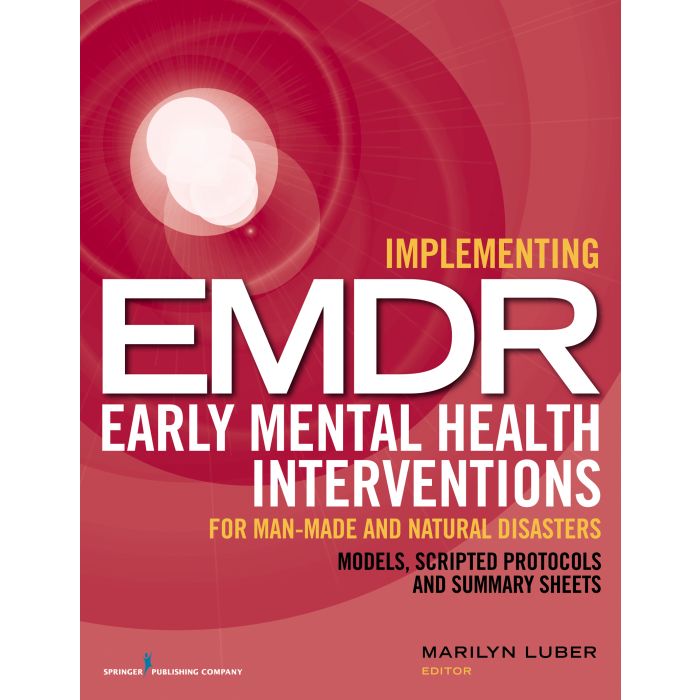
Implementing EMDR early mental health interventions for man-made and natural disasters: Models, scripted protocols and summary sheets (Springer, 2014)

Read More

EMDR Early Intervention Resources

Read More

Find an EMDR Therapist®

EMDRIAâ„¢ has more than 18,000 members trained to provide EMDR Therapy. Find a therapist near you.

Find an EMDR Therapist®
d2088683554149097441c3e1f6c13679941fbfdf (1)
EMDRIA

7000 N Mo Pac Expy
Ste 200
Austin, TX 78731-3013

info@emdria.org

512-451-5200

EMDRIA Facebook (opens in new tab) EMDRIA Twitter (opens in new tab) (opens in new tab) EMDRIA LinkedIn (opens in new tab) EMDRIA YouTube (opens in new tab) EMDRIA Online Community (opens in new tab)
  • About EMDR Therapy
  • EMDR Training and Education
  • EMDRIAâ„¢ Membership
  • Publications & Resources
  • EMDRIA Member Connect
  • EMDRIA Foundation
  • Privacy Policy
  • Copyright Policy
  • Accessibility Statement
  • Sitemap

© 1995-2026 EMDR International Association™. All rights reserved.

Website by Flipside Group

  • This field is for validation purposes and should be left unchanged.
  • This field is hidden when viewing the form
  • This field is hidden when viewing the form
  • This field is hidden when viewing the form
  • This field is hidden when viewing the form
  • This field is hidden when viewing the form
  • Disclaimer: This form is intended for initial contact with a therapist. Your message is submitted through the EMDRIA website and then sent to the therapist by email. Because email is not a secure method of communication, please consider limiting the amount of detailed personal, health, or confidential information you include in your initial message. Once you've established contact, you and the therapist can determine the most appropriate and secure way to communicate. Please be aware that email delivery cannot be guaranteed, and therapists manage their own inquiries and response times. Sending a message through this form does not guarantee that the therapist will receive, read, or respond to your inquiry. If a phone number is listed on the therapist's profile, you may wish to follow up by phone if you do not receive a response. If you are experiencing an emergency or are in immediate danger, do not use this form. Call 911 or go to your nearest emergency department.
We use cookies to ensure the best website experience. See our privacy policy to learn more.