

Application of EMDR Therapy for Borderline Personality Disorder (Journal of EMDR Practice and Research)
Early traumatic & adverse life experiences contribute to the development of borderline personality disorder (BPD). EMDR can help.
Clinical Q&A: The Seed-to-Weed Technique: Graphically Illustrating Symptom Etiology, Treatment, and Resolution (Journal of EMDR Practice and Research)
An illustrated garden metaphor is used to guide a client to look at his or her life experiences and gain an understanding.

최근 외상을 경험한 초등학교 아동들에 대한 정동 조절 집단치료의 치료 반응 (신경정신의학)
본 연구가 시사하는 바는 단 기간의 정동 조절을 목표로 하 는 집단심리치료 기법이 급성 외상기 아동에게 효과적이었.
Eye movement desensitization and reprocessing therapy in subsyndromal bipolar patients with a history of traumatic events: A randomized, controlled pilot-study (Psychiatry Research)
Pilot study suggests EMDR therapy as an effective/safe intervention for subsyndromal mood & trauma symptoms in traumatized bipolar patients.

Dissociation, EMDR, and adaptive information processing: The role of sensory awareness (Springer, 2014)
This chapter explores sensory awareness, EMDR, and adaptive information processing (AIP) for applications beyond PTSD, in this text focused on dissociation.
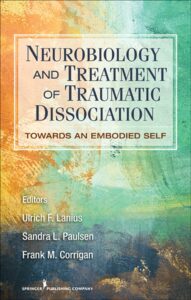
Neurobiology and treatment of traumatic dissociation: Towards and embodied self (Springer, 2014)
A neurobiological model that accounts for the therapeutic effects of somatic therapies and EMDR, with two chapters specific to EMDR.

Integrative parenting: Strategies for raising children affected by attachment trauma (W. W. Norton, 2014)
Parenting strategies to use with EMDR and family therapist team to understand your traumatized child and improve attachment security.

Integrative team treatment for attachment trauma in children: Family therapy and EMDR (W. W. Norton, 2014)
EMDR and family therapists can strengthen the parent-child attachment bond and help mend early experiences that drive the child’s behavior.
What does the data say about the importance of eye movement in EMDR? (Journal of Behavior Therapy and Experimental Psychiatry)
A clarification of the data in a previous meta-analysis about the efficacy of eye movements in EMDR therapy.
The role of eye movement desensitization and reprocessing (EMDR) therapy in medicine: Addressing the psychological and physical symptoms stemming from adverse life experiences (The Permanente Journal)
Research shows that EMDR therapy in medicine can address adverse life experiences that contribute to both psychological and physical symptoms.
A Role for EMDR in the Treatment of Trauma in Patients Suffering From a Psychosis: Four Vignettes (Journal of EMDR Practice and Research)
Patients with a functional psychosis are likely to have a history of trauma and symptoms of PTSD, or traumatized by their psychotic symptoms.
The “Flashforward Procedure”: Confronting the Catastrophe (Journal of EMDR Practice and Research)
“Flashforward procedure” of EMDR to treat irrational fears, like a persisting fear after core memories have been fully processed.
