Skip to content
EMDR International Association
  • About EMDR Therapy
    • What is EMDR Therapy?

      AIP Model

      AIP Model

      Experiencing EMDR Therapy

      Experiencing EMDR Therapy

      EMDR in Treatment Guidelines

      EMDR in Treatment Guidelines

      Recent Research

      Recent Research

      Using EMDR with ...

      Addiction

      Addiction

      Anxiety

      Anxiety

      Childhood Trauma

      Childhood Trauma

      Depression

      Depression

      PTSD

      PTSD

      Find an EMDR Therapist®
  • About EMDR Therapy
    • What is EMDR therapy?
      • Adaptive Information Processing (AIP) Model
      • EMDR Therapy & Addiction
      • EMDR Therapy & Anxiety
      • EMDR Therapy & Childhood Trauma
      • EMDR Therapy & Depression
      • EMDR Therapy & PTSD
    • Experiencing EMDR Therapy
    • EMDR Therapy in Treatment Guidelines
    • Recent Research on EMDR Therapy
    • Find an EMDR Therapist®
  • Training & Events
    • EMDR Basic Training

      Eligibility Requirements

      Eligibility Requirements

      5 Steps to EMDR Training

      5 Steps to EMDR Training

      EMDR Basic Training FAQs

      EMDR Basic Training FAQs

      Training vs Certification

      Training vs Certification

      Find EMDR Basic Training

      Find EMDR Basic Training

      EMDR Education Calendar

      Consultant / Trainer Events

      EMDRIA OnDemand Education

      EMDRIA Conference
      EMDRIA Virtual Summit
  • Training & Events
    • EMDR Education Calendar
    • EMDR Basic Training
      • 5 Steps to Take an EMDRIA™ Approved EMDR Basic Training
      • Eligibility Requirements for EMDR Basic Training
      • EMDR Basic Training FAQs
      • Training vs Certification
      • Find an EMDR Basic Training
    • Continuing Education
      • OnDemand Education
    • EMDRIA Conference
    • EMDRIA Summit
      • Summit Speaker Resources
    • EMDRIA™ Digital Badges
    • EMDRIA Certified Therapist™ Application
      • How to Market Yourself as an EMDRIA Certified Therapist™
      • EMDRIA Certified Therapist™ FAQs
      • Membership vs Certification
      • EMDRIA Certified Therapist™ Renewal
    • EMDRIA Approved Consultant™ Application
      • Updating EMDRIA Approved Consultant™ Standards
      • CIT Declaration Form
      • EMDRIA Approved Consultant in Training™ FAQs
      • Consultation Packet
      • EMDRIA Approved Consultant™ Renewal
      • Consultant Day Events
    • EMDRIA Credit Provider & Program Applications
    • EMDRIA Approved Trainer™ Application
    • EMDR Basic Training Policies & Requirements
    • Standards for EMDR Basic Training
    • Trainer Day Events
  • Credentialing
    • EMDRIA Certified Therapist™

      Membership vs Certification

      Membership vs Certification

      Certification FAQs

      Certification FAQs

      Certified Therapist Renewal

      Certified Therapist Renewal

      EMDRIA Approved Consultant™

      Updating Consultant Standards

      Updating Consultant Standards

      CIT Declaration Form

      CIT Declaration Form

      Consultant-in-Training FAQs

      Consultant-in-Training FAQs

      Approved Consultant Renewal

      Approved Consultant Renewal

      EMDRIA Approved Trainer™

      EMDR Basic Training Standards

      EMDR Basic Training Standards

      Training Policies & Requirements

      Training Policies & Requirements

      EMDRIA Credit Providers

      Program Application & Guidelines

      Program Application & Guidelines

      EMDRIA Credit FAQs

      EMDRIA Credit FAQs

      EMDRIA Digital Badges

      Consultant / Trainer Events

      EMDRIA Certified
      Therapist™ Application
      EMDRIA Approved
      Consultant™ Application
      EMDRIA Approved
      Trainer™ Application
  • Publications & Resources
    • Journal of EMDR Practice & Research®

      Go With That Magazine®

      Focal Point Blog

      Let's Talk EMDR Podcast

      EMDRIA Library

      Glossary of EMDR Terms

      Glossary of EMDR Terms

      Online EMDR Therapy Resources

      Online EMDR Therapy Resources

      Antiracism Resources

      Antiracism Resources

      Toolkits & Practice Resources

      Toolkits & Practice Resources

      Español: Recursos en Español

      Español: Recursos en Español

      Seach EMDRIA Library
      Subscribe to Blog
  • Publications & Resources
    • EMDRIA Library
    • Glossary of EMDR Terms
    • Antiracism Resources
    • Online EMDR Therapy Resources
    • Focal Point Blog
      • Subscribe to Focal Point Blog
    • Go With That Magazine®
    • Journal of EMDR Practice & Research®
    • Let’s Talk EMDR Podcast
    • Toolkits & Practice Resources
      • 8 Phases Toolkit
      • Building Your EMDR Practice Toolkit
      • Client Brochures
      • Addictions Toolkit
      • Depression Toolkit
      • EMDRIA Children’s Toolkit
      • Chronic Pain Toolkit
      • Military Toolkit
      • EMDR Consultation Toolkit
    • Kits y Recursos Prácticos
      • Folletos de Terapia EMDR
      • Kit de las 8 Fases
      • Kit de la Depresión
      • Kit del Dolor Crónico
      • Kit de los Niños y Niñas
  • Membership
    • Join EMDRIA

      Benefits of Membership

      Benefits of Membership

      Membership vs Certification

      Membership vs Certification

      Agency Group Membership

      Agency Group Membership

      International Affiliates

      International Affiliates

      Members Only

      Account Overview

      Account Overview

      Directory Profile Information

      Directory Profile Information

      Renew Membership

      Renew Membership

      Retired Membership

      Retired Membership

      Member Hub
      EMDRIA Online Community
  • Membership
    • Join EMDRIA™
      • Retired Membership
      • Agency Group Membership
      • International Affiliate Organizations
    • Member Hub
    • Renew EMDRIA™ Membership
    • Membership Benefits
    • EMDRIA™ Member Account Overview
    • Directory Profile Information
    • Membership vs Certification
  • About EMDRIA™
    • About Us

      EMDRIA 30th Anniversary

      EMDRIA 30th Anniversary

      Policies & Code of Conduct

      Policies & Code of Conduct

      EMDRIA Awards & Winners

      EMDRIA Awards & Winners

      EMDRIA FAQs

      EMDRIA FAQs

      Meet the Board of Directors

      Board News and Updates

      Board News and Updates

      Call for BoD Nominations

      Call for BoD Nominations

      Contact Media Relations

      Contact EMDRIA

      EMDRIA Foundation
  • About EMDRIA™
    • EMDRIA’s 30th Anniversary
    • EMDRIA™ FAQs
    • Contact EMDRIA™
    • Contact Media Relations
    • Meet the Board of Directors
    • Board News and Updates
      • Annual Membership Meeting
    • EMDR International Association™ Policies
    • EMDRIA™ Awards & Winners
    • EMDRIA Foundation
FacebookTwitterLinkedinInstagramWordpress
  • Join EMDRIA™
  • Contact
  • Find an EMDR Therapist®
EMDR International Association
Log In
  • About EMDR Therapy
    • What is EMDR Therapy?

      AIP Model

      AIP Model

      Experiencing EMDR Therapy

      Experiencing EMDR Therapy

      EMDR in Treatment Guidelines

      EMDR in Treatment Guidelines

      Recent Research

      Recent Research

      Using EMDR with ...

      Addiction

      Addiction

      Anxiety

      Anxiety

      Childhood Trauma

      Childhood Trauma

      Depression

      Depression

      PTSD

      PTSD

      Find an EMDR Therapist®
  • About EMDR Therapy
    • What is EMDR therapy?
      • Adaptive Information Processing (AIP) Model
      • EMDR Therapy & Addiction
      • EMDR Therapy & Anxiety
      • EMDR Therapy & Childhood Trauma
      • EMDR Therapy & Depression
      • EMDR Therapy & PTSD
    • Experiencing EMDR Therapy
    • EMDR Therapy in Treatment Guidelines
    • Recent Research on EMDR Therapy
    • Find an EMDR Therapist®
  • Training & Events
    • EMDR Basic Training

      Eligibility Requirements

      Eligibility Requirements

      5 Steps to EMDR Training

      5 Steps to EMDR Training

      EMDR Basic Training FAQs

      EMDR Basic Training FAQs

      Training vs Certification

      Training vs Certification

      Find EMDR Basic Training

      Find EMDR Basic Training

      EMDR Education Calendar

      Consultant / Trainer Events

      EMDRIA OnDemand Education

      EMDRIA Conference
      EMDRIA Virtual Summit
  • Training & Events
    • EMDR Education Calendar
    • EMDR Basic Training
      • 5 Steps to Take an EMDRIA™ Approved EMDR Basic Training
      • Eligibility Requirements for EMDR Basic Training
      • EMDR Basic Training FAQs
      • Training vs Certification
      • Find an EMDR Basic Training
    • Continuing Education
      • OnDemand Education
    • EMDRIA Conference
    • EMDRIA Summit
      • Summit Speaker Resources
    • EMDRIA™ Digital Badges
    • EMDRIA Certified Therapist™ Application
      • How to Market Yourself as an EMDRIA Certified Therapist™
      • EMDRIA Certified Therapist™ FAQs
      • Membership vs Certification
      • EMDRIA Certified Therapist™ Renewal
    • EMDRIA Approved Consultant™ Application
      • Updating EMDRIA Approved Consultant™ Standards
      • CIT Declaration Form
      • EMDRIA Approved Consultant in Training™ FAQs
      • Consultation Packet
      • EMDRIA Approved Consultant™ Renewal
      • Consultant Day Events
    • EMDRIA Credit Provider & Program Applications
    • EMDRIA Approved Trainer™ Application
    • EMDR Basic Training Policies & Requirements
    • Standards for EMDR Basic Training
    • Trainer Day Events
  • Credentialing
    • EMDRIA Certified Therapist™

      Membership vs Certification

      Membership vs Certification

      Certification FAQs

      Certification FAQs

      Certified Therapist Renewal

      Certified Therapist Renewal

      EMDRIA Approved Consultant™

      Updating Consultant Standards

      Updating Consultant Standards

      CIT Declaration Form

      CIT Declaration Form

      Consultant-in-Training FAQs

      Consultant-in-Training FAQs

      Approved Consultant Renewal

      Approved Consultant Renewal

      EMDRIA Approved Trainer™

      EMDR Basic Training Standards

      EMDR Basic Training Standards

      Training Policies & Requirements

      Training Policies & Requirements

      EMDRIA Credit Providers

      Program Application & Guidelines

      Program Application & Guidelines

      EMDRIA Credit FAQs

      EMDRIA Credit FAQs

      EMDRIA Digital Badges

      Consultant / Trainer Events

      EMDRIA Certified
      Therapist™ Application
      EMDRIA Approved
      Consultant™ Application
      EMDRIA Approved
      Trainer™ Application
  • Publications & Resources
    • Journal of EMDR Practice & Research®

      Go With That Magazine®

      Focal Point Blog

      Let's Talk EMDR Podcast

      EMDRIA Library

      Glossary of EMDR Terms

      Glossary of EMDR Terms

      Online EMDR Therapy Resources

      Online EMDR Therapy Resources

      Antiracism Resources

      Antiracism Resources

      Toolkits & Practice Resources

      Toolkits & Practice Resources

      Español: Recursos en Español

      Español: Recursos en Español

      Seach EMDRIA Library
      Subscribe to Blog
  • Publications & Resources
    • EMDRIA Library
    • Glossary of EMDR Terms
    • Antiracism Resources
    • Online EMDR Therapy Resources
    • Focal Point Blog
      • Subscribe to Focal Point Blog
    • Go With That Magazine®
    • Journal of EMDR Practice & Research®
    • Let’s Talk EMDR Podcast
    • Toolkits & Practice Resources
      • 8 Phases Toolkit
      • Building Your EMDR Practice Toolkit
      • Client Brochures
      • Addictions Toolkit
      • Depression Toolkit
      • EMDRIA Children’s Toolkit
      • Chronic Pain Toolkit
      • Military Toolkit
      • EMDR Consultation Toolkit
    • Kits y Recursos Prácticos
      • Folletos de Terapia EMDR
      • Kit de las 8 Fases
      • Kit de la Depresión
      • Kit del Dolor Crónico
      • Kit de los Niños y Niñas
  • Membership
    • Join EMDRIA

      Benefits of Membership

      Benefits of Membership

      Membership vs Certification

      Membership vs Certification

      Agency Group Membership

      Agency Group Membership

      International Affiliates

      International Affiliates

      Members Only

      Account Overview

      Account Overview

      Directory Profile Information

      Directory Profile Information

      Renew Membership

      Renew Membership

      Retired Membership

      Retired Membership

      Member Hub
      EMDRIA Online Community
  • Membership
    • Join EMDRIA™
      • Retired Membership
      • Agency Group Membership
      • International Affiliate Organizations
    • Member Hub
    • Renew EMDRIA™ Membership
    • Membership Benefits
    • EMDRIA™ Member Account Overview
    • Directory Profile Information
    • Membership vs Certification
  • About EMDRIA™
    • About Us

      EMDRIA 30th Anniversary

      EMDRIA 30th Anniversary

      Policies & Code of Conduct

      Policies & Code of Conduct

      EMDRIA Awards & Winners

      EMDRIA Awards & Winners

      EMDRIA FAQs

      EMDRIA FAQs

      Meet the Board of Directors

      Board News and Updates

      Board News and Updates

      Call for BoD Nominations

      Call for BoD Nominations

      Contact Media Relations

      Contact EMDRIA

      EMDRIA Foundation
  • About EMDRIA™
    • EMDRIA’s 30th Anniversary
    • EMDRIA™ FAQs
    • Contact EMDRIA™
    • Contact Media Relations
    • Meet the Board of Directors
    • Board News and Updates
      • Annual Membership Meeting
    • EMDR International Association™ Policies
    • EMDRIA™ Awards & Winners
    • EMDRIA Foundation

Stochastic resonance as a proposed neurobiological model for eye movement desensitization and reprocessing (EMDR) therapy (Medical Hypotheses)

Article-FeaturedImage

Home / Resources / Stochastic resonance as a proposed neurobiological model for eye movement desensitization and reprocessing (EMDR) therapy (Medical Hypotheses)

Stochastic resonance as a proposed neurobiological model for eye movement desensitization and reprocessing (EMDR) therapy

This paper discusses an innate, biological mechanism (stochastic resonance) found in biological systems, including the human nervous system, that may explain the efficacy of dual attention stimuli (DAS) or bilateral stimulation (ABS).


Article Abstract

“EMDR therapy is recommended in several guidelines in the International field of psychological trauma. The dual attention stimuli/alternating bilateral stimulation (DAS/ABS) element of EMDR therapy has no proposed mechanism of action agreed upon, which explains the rapid shifts in cognitions and dysfunctional traumatic memory networks that are central to its observable efficacy. This paper discusses an innate, biological mechanism found in biological systems, including the human nervous system that may explain the efficacy of DAS/ABS. This mechanism is stochastic resonance (SR). SR is observed to make unintelligible, subthreshold signals intelligible and facilitates signal transmission. It provides a potential mechanism for discrimination and the selective focusing of attention, which are important factors in effective psychotherapy for the psychologically traumatised individual. The body/mind complex aims to achieve the functional encoding of memories in the neocortex and a key structural crossroads in this process is the thalamus. Activity in the thalamus is decreased in Post-Traumatic Stress Disorder (PTSD) compared to non-PTSD patients and a form of ‘gating’ is known to occur at the thalamic level. This ‘gating’ is adaptive and it is postulated to protect the higher neocortical systems in times of trauma. Although the model is initially somewhat counterintuitive, Stochastic Resonance; a form of random ‘noise’, can be considered ‘helpful randomness’ and when present in the thalamus SR can help filter and control sensitivity to incoming signals; helping to discriminate what is communicated. Naturally occurring SR is normally present as a result of descending cortico-thalamic activity, but appears attenuated as a result of exposure to trauma. The view of ‘noise’ in the current era of cell phones and High Definition is generally negative with science going to significant lengths to clean up signals: i.e. removing noise from them. We do not want white noise in our music or during our cell phone calls. However, some researchers invite us to consider that not all noise is bad and the downward cortico-thalamic ‘noise’ is an example of this category of ‘helpful noise’. This paper will discuss the potential role of SR, as the mechanism by which DAS/ABS generates a random (stochastic) signal, facilitating a return to functional memory processing, where there is a lack of naturally occurring noise from the descending cortico-thalamic connections because of exposure to trauma. Modelling the mechanism as SR will facilitate further study into EMDR therapy and this will hopefully encourage perspicacity, where there has previously been derision.”

—Description from publisher

Article Access

Purchase/Subscription Required

Miller, P. W., McGowan, I. W., Bergmann, U., Farrell, D., & McLaughlin, D. F. (2018). Stochastic resonance as a proposed neurobiological model for eye movement desensitization and reprocessing (EMDR) therapy. Medical Hypotheses, 121, 106-111. https://doi.org/10.1016/j.mehy.2018.09.010 

View the Resource
Basic Info Collapse

Date
December 1, 2018

Creator(s)
Paul William Miller, Iain William McGowan, Uri Bergmann

Contributor(s)
Derek Farrell, Derek Francis McLaughlin

Practice & Methods
Mechanisms of Action, Neurobiology

More Info Collapse

Extent
5 pages

Publisher
Elsevier

Rights
© 2018 Elsevier Ltd. All rights reserved.

APA Citation
Miller, P. W., McGowan, I. W., Bergmann, U., Farrell, D., & McLaughlin, D. F. (2018). Stochastic resonance as a proposed neurobiological model for eye movement desensitization and reprocessing (EMDR) therapy. Medical Hypotheses, 121, 106-111. https://doi.org/10.1016/j.mehy.2018.09.010 

Audience
EMDR Therapists, Other Mental Health Professionals

Language
English

Content Type
Article, Peer-Reviewed

Access Type
External Resource

Related Resources
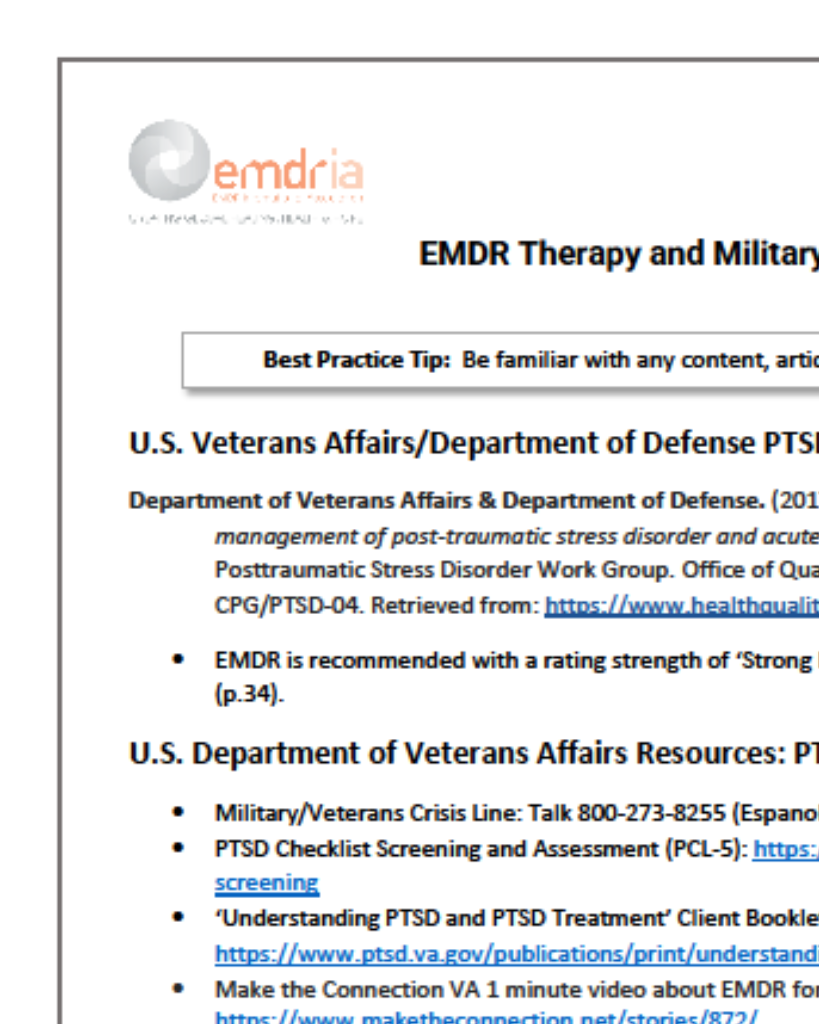
EMDR Therapy and Military Resource List

Read More

Guidelines for Virtual EMDR Therapy: A Report of the Virtual Training and Therapy Task Group

Read More

Core Competencies for EMDRIA Approved Consultants™

Read More

Find an EMDR Therapist®

EMDRIA™ has more than 18,000 members trained to provide EMDR Therapy. Find a therapist near you.

Find an EMDR Therapist®
sun-flare-min
logo-emdria-grayscale-min

7000 N Mo Pac Expy
Ste 200
Austin, TX 78731-3013

Email info@emdria.org

Phone 512-451-5200

EMDRIA Facebook EMDRIA Twitter EMDRIA LinkedIn EMDRIA YouTube EMDRIA Online Community
  • About EMDR Therapy
  • EMDR Training and Education
  • EMDRIA™ Membership
  • Publications & Resources
  • EMDRIA Online Community
  • EMDRIA Foundation
  • Privacy Policy
  • Copyright Policy
  • Accessibility Statement
  • Sitemap
gold-circle-2022

© 1995-2026 EMDR International Association™. All rights reserved.

Website by Yoko Co

  • This field is for validation purposes and should be left unchanged.
  • This field is hidden when viewing the form
  • This field is hidden when viewing the form
  • This field is hidden when viewing the form
  • This field is hidden when viewing the form
  • This field is hidden when viewing the form
  • Please be aware that email is not a secure means of communication and spam filters may prevent your email from reaching the therapist. We recommend you follow up with a phone call. Sending an email using this page does not guarantee that the recipient will receive, read, or respond to your email.

    If this is an emergency do not use this form. Call 911 or your nearest hospital.

We use cookies to ensure the best website experience. See our privacy policy to learn more.