Skip to content
EMDR International Association
  • About EMDR Therapy
    • Learn more about EMDR
      Therapy

      Find an EMDR Therapist®

      What is EMDR Therapy

      AIP Model

      AIP Model

      Experiencing EMDR Therapy

      Experiencing EMDR Therapy

      EMDR in Treatment Guidelines

      EMDR in Treatment Guidelines

      Recent Research

      Recent Research

      Uses for EMDR

      Addiction

      Addiction

      Anxiety

      Anxiety

      Childhood Trauma

      Childhood Trauma

      Depression

      Depression

      PTSD

      PTSD

  • About EMDR Therapy
    • What is EMDR therapy?
      • AIP Model
      • Experiencing EMDR Therapy
      • EMDR in Treatment Guidelines
      • Recent Research
    • Uses in EMDR
      • Addiction
      • Anxiety
      • Childhood Trauma
      • Depression
      • PTSD
    • Find an EMDR Therapist®
  • Training & Events
    • EMDRIAâ„¢ Training and
      Events

      EMDRIAâ„¢ Conference
      EMDRIAâ„¢ Virtual Summit

      EMDR Basic Training

      Eligibility Requirements

      Eligibility Requirements

      5 Steps to EMDR Training

      5 Steps to EMDR Training

      EMDR Basic Training FAQs

      EMDR Basic Training FAQs

      Training vs Certification

      Training vs Certification

      Find EMDR Basic Training

      Find EMDR Basic Training

      EMDR Education Calendar

      Consultant / Trainer Events

      EMDRIA OnDemand Education

  • Training & Events
    • EMDR Basic Training
      • Eligibility Requirements
      • 5 Steps to EMDR Training
      • EMDR Basic Training FAQs
      • Training vs Certification
      • Find an EMDR Basic Training
    • EMDR Education Calendar
    • Consultant / Trainer Events
    • EMDRIA OnDemand Education
    • EMDRIA Conference
    • EMDRIA Summit
    • EMDRIA Digital Badges
    • Consultant / Trainer Events
    • Apply: Certified Therapist
    • Apply: Approved Consultant
    • Apply: Approved Trainer
  • Credentialing
    • Puzzle

      Credentialing

      Apply: Certified Therapist
      Apply: Approved Consultant
      Apply: Approved Trainer

      EMDRIA Certified Therapistâ„¢

      Membership vs Certification

      Membership vs Certification

      Certification FAQs

      Certification FAQs

      Certified Therapist Renewal

      Certified Therapist Renewal

      EMDRIA Approved Consultantâ„¢

      Updating Consultant Standards

      Updating Consultant Standards

      CIT Declaration Form

      CIT Declaration Form

      Consultant-in-Training FAQs

      Consultant-in-Training FAQs

      Approved Consultant Renewal

      Approved Consultant Renewal

      EMDRIA Approved Trainerâ„¢

      EMDR Basic Training Standards

      EMDR Basic Training Standards

      Training Policies & Requirements

      Training Policies & Requirements

      EMDRIA Credit Providers

      Program Application & Guidelines

      Program Application & Guidelines

      EMDRIA Credit FAQs

      EMDRIA Credit FAQs

      EMDRIA Digital Badges

      Consultant / Trainer Events

  • Credentialing
    • EMDRIA Certified Therapistâ„¢
      • Membership vs Certification
      • Certified FAQs
      • Certified Therapist Renewal
    • EMDRIA Approved Consultantâ„¢
      • Updating Consultant Standards
      • CIT Declaration Form
      • Consultant in Training FAQs
      • Approved Consultant Renewal
    • EMDRIA Approved Trainerâ„¢
      • EMDR Basic Training Standards
      • Training Policies & Requirements
    • EMDRIA Credit Providers
      • Program Application & Guidelines
      • EMDRIA Credit FAQs
  • Publications & Resources
    • Publications & Resources

      Search the EMDRIA Library
      Subscribe to our Blog

      Journal of EMDR Practice & Research®

      Go With That Magazine®

      Focal Point Blog

      Let's Talk EMDR Podcast

      EMDRIA Library

      Glossary of EMDR Terms

      Glossary of EMDR Terms

      Online EMDR Therapy Resources

      Online EMDR Therapy Resources

      Antiracism Resources

      Antiracism Resources

      Toolkits & Practice Resources

      Toolkits & Practice Resources

      Español: Recursos en Español

      Español: Recursos en Español

  • Publications & Resources
    • Journal of EMDR Practice & Research®
    • Go With That Magazine®
    • Focal Point Blog
    • Let’s Talk EMDR Podcast
    • EMDRIA Library
      • Glossary of EMDR Terms
      • Online EMDR Therapy Resources
      • Antiracism Resources
      • Toolkits & Practice Resources
      • Español: Recursos en Español
    • Search the EMDRIA Library
    • Subscribe to Focal Point Blog
  • Membership
    • Users_Group

      Membership

      Member Hub
      EMDRIA Member Connect

      Join EMDRIA

      Benefits of Membership

      Benefits of Membership

      Membership vs Certification

      Membership vs Certification

      Agency Group Membership

      Agency Group Membership

      International Affiliates

      International Affiliates

      Members Only

      Account Overview

      Account Overview

      Directory Profile Information

      Directory Profile Information

      Renew Membership

      Renew Membership

      Retired Membership

      Retired Membership

  • Membership
    • Join EMDRIAâ„¢
      • Benefits of Membership
      • Membership vs Certification
      • Agency Group Membership
      • International Affiliates
    • Members Only
      • Account Overview
      • Directory Profile Information
      • Renew Membership
      • Retired Membership
    • Member Hub
    • EMDRIA Member Connect
  • About EMDRIAâ„¢
    • Circle_Help

      About EMDRIAâ„¢

      EMDRIA Foundation

      About Us

      EMDRIA 30th Anniversary

      EMDRIA 30th Anniversary

      Policies & Code of Conduct

      Policies & Code of Conduct

      EMDRIA Awards & Winners

      EMDRIA Awards & Winners

      EMDRIA FAQs

      EMDRIA FAQs

      Meet the Board of Directors

      Board News and Updates

      Board News and Updates

      Contact Media Relations

      Contact EMDRIA

  • About EMDRIAâ„¢
    • About EMDRIAâ„¢
      • EMDRIA’s 30th Anniversary
      • Policies & Code of Conduct
      • EMDRIA Awards & Winners
      • EMDRIA FAQs
    • Meet the Board of Directors
      • Board News and Updates
    • Contact Media Relations
    • Contact EMDRIA
    • EMDRIA Foundation
FacebookTwitterLinkedinInstagramWordpress
  • Join EMDRIAâ„¢
  • Contact
  • Find an EMDR Therapist®
EMDR International Association
Log In
  • About EMDR Therapy
    • Learn more about EMDR
      Therapy

      Find an EMDR Therapist®

      What is EMDR Therapy

      AIP Model

      AIP Model

      Experiencing EMDR Therapy

      Experiencing EMDR Therapy

      EMDR in Treatment Guidelines

      EMDR in Treatment Guidelines

      Recent Research

      Recent Research

      Uses for EMDR

      Addiction

      Addiction

      Anxiety

      Anxiety

      Childhood Trauma

      Childhood Trauma

      Depression

      Depression

      PTSD

      PTSD

  • About EMDR Therapy
    • What is EMDR therapy?
      • AIP Model
      • Experiencing EMDR Therapy
      • EMDR in Treatment Guidelines
      • Recent Research
    • Uses in EMDR
      • Addiction
      • Anxiety
      • Childhood Trauma
      • Depression
      • PTSD
    • Find an EMDR Therapist®
  • Training & Events
    • EMDRIAâ„¢ Training and
      Events

      EMDRIAâ„¢ Conference
      EMDRIAâ„¢ Virtual Summit

      EMDR Basic Training

      Eligibility Requirements

      Eligibility Requirements

      5 Steps to EMDR Training

      5 Steps to EMDR Training

      EMDR Basic Training FAQs

      EMDR Basic Training FAQs

      Training vs Certification

      Training vs Certification

      Find EMDR Basic Training

      Find EMDR Basic Training

      EMDR Education Calendar

      Consultant / Trainer Events

      EMDRIA OnDemand Education

  • Training & Events
    • EMDR Basic Training
      • Eligibility Requirements
      • 5 Steps to EMDR Training
      • EMDR Basic Training FAQs
      • Training vs Certification
      • Find an EMDR Basic Training
    • EMDR Education Calendar
    • Consultant / Trainer Events
    • EMDRIA OnDemand Education
    • EMDRIA Conference
    • EMDRIA Summit
    • EMDRIA Digital Badges
    • Consultant / Trainer Events
    • Apply: Certified Therapist
    • Apply: Approved Consultant
    • Apply: Approved Trainer
  • Credentialing
    • Puzzle

      Credentialing

      Apply: Certified Therapist
      Apply: Approved Consultant
      Apply: Approved Trainer

      EMDRIA Certified Therapistâ„¢

      Membership vs Certification

      Membership vs Certification

      Certification FAQs

      Certification FAQs

      Certified Therapist Renewal

      Certified Therapist Renewal

      EMDRIA Approved Consultantâ„¢

      Updating Consultant Standards

      Updating Consultant Standards

      CIT Declaration Form

      CIT Declaration Form

      Consultant-in-Training FAQs

      Consultant-in-Training FAQs

      Approved Consultant Renewal

      Approved Consultant Renewal

      EMDRIA Approved Trainerâ„¢

      EMDR Basic Training Standards

      EMDR Basic Training Standards

      Training Policies & Requirements

      Training Policies & Requirements

      EMDRIA Credit Providers

      Program Application & Guidelines

      Program Application & Guidelines

      EMDRIA Credit FAQs

      EMDRIA Credit FAQs

      EMDRIA Digital Badges

      Consultant / Trainer Events

  • Credentialing
    • EMDRIA Certified Therapistâ„¢
      • Membership vs Certification
      • Certified FAQs
      • Certified Therapist Renewal
    • EMDRIA Approved Consultantâ„¢
      • Updating Consultant Standards
      • CIT Declaration Form
      • Consultant in Training FAQs
      • Approved Consultant Renewal
    • EMDRIA Approved Trainerâ„¢
      • EMDR Basic Training Standards
      • Training Policies & Requirements
    • EMDRIA Credit Providers
      • Program Application & Guidelines
      • EMDRIA Credit FAQs
  • Publications & Resources
    • Publications & Resources

      Search the EMDRIA Library
      Subscribe to our Blog

      Journal of EMDR Practice & Research®

      Go With That Magazine®

      Focal Point Blog

      Let's Talk EMDR Podcast

      EMDRIA Library

      Glossary of EMDR Terms

      Glossary of EMDR Terms

      Online EMDR Therapy Resources

      Online EMDR Therapy Resources

      Antiracism Resources

      Antiracism Resources

      Toolkits & Practice Resources

      Toolkits & Practice Resources

      Español: Recursos en Español

      Español: Recursos en Español

  • Publications & Resources
    • Journal of EMDR Practice & Research®
    • Go With That Magazine®
    • Focal Point Blog
    • Let’s Talk EMDR Podcast
    • EMDRIA Library
      • Glossary of EMDR Terms
      • Online EMDR Therapy Resources
      • Antiracism Resources
      • Toolkits & Practice Resources
      • Español: Recursos en Español
    • Search the EMDRIA Library
    • Subscribe to Focal Point Blog
  • Membership
    • Users_Group

      Membership

      Member Hub
      EMDRIA Member Connect

      Join EMDRIA

      Benefits of Membership

      Benefits of Membership

      Membership vs Certification

      Membership vs Certification

      Agency Group Membership

      Agency Group Membership

      International Affiliates

      International Affiliates

      Members Only

      Account Overview

      Account Overview

      Directory Profile Information

      Directory Profile Information

      Renew Membership

      Renew Membership

      Retired Membership

      Retired Membership

  • Membership
    • Join EMDRIAâ„¢
      • Benefits of Membership
      • Membership vs Certification
      • Agency Group Membership
      • International Affiliates
    • Members Only
      • Account Overview
      • Directory Profile Information
      • Renew Membership
      • Retired Membership
    • Member Hub
    • EMDRIA Member Connect
  • About EMDRIAâ„¢
    • Circle_Help

      About EMDRIAâ„¢

      EMDRIA Foundation

      About Us

      EMDRIA 30th Anniversary

      EMDRIA 30th Anniversary

      Policies & Code of Conduct

      Policies & Code of Conduct

      EMDRIA Awards & Winners

      EMDRIA Awards & Winners

      EMDRIA FAQs

      EMDRIA FAQs

      Meet the Board of Directors

      Board News and Updates

      Board News and Updates

      Contact Media Relations

      Contact EMDRIA

  • About EMDRIAâ„¢
    • About EMDRIAâ„¢
      • EMDRIA’s 30th Anniversary
      • Policies & Code of Conduct
      • EMDRIA Awards & Winners
      • EMDRIA FAQs
    • Meet the Board of Directors
      • Board News and Updates
    • Contact Media Relations
    • Contact EMDRIA
    • EMDRIA Foundation
Home / Resources / Attachment / Treatment of attachment trauma: Effects of an online EMDR couple protocol on trauma symptoms, conflict resolution, and forgiveness (Counselling & Psychotherapy Research)

Share on social media

Treatment of attachment trauma: Effects of an online EMDR couple protocol on trauma symptoms, conflict resolution, and forgiveness (Counselling & Psychotherapy Research)

Treatment of attachment trauma: Effects of an online EMDR couple protocol on trauma symptoms, conflict resolution, and forgiveness

This study aimed to evaluate the effects of an online EMDR couple protocol in reducing trauma-related symptoms, improving conflict resolution strategies, and increasing willingness to forgive among couples with a history of attachment trauma.


Article Abstract

“Background: Incidents characterised by betrayal, abandonment, or emotional neglect within a romantic relationship can profoundly impact relational functioning and lead to post-traumatic stress symptoms in both partners. Although in-person therapies, such as Emotionally Focused Couples Therapy and Eye Movement Desensitisation and Reprocessing (EMDR), have shown promise, the feasibility and effectiveness of delivering EMDR online to address attachment trauma remain underexplored.

Aims: This study aimed to evaluate the effects of an online EMDR couple protocol in reducing trauma-related symptoms, improving conflict resolution strategies, and increasing willingness to forgive among couples with a history of attachment trauma. Subgroup analysis was carried out based on gender, partner roles (offending and injured), and types of conflict (single incident and complex). A secondary aim was to determine if gains were sustained at a one-month follow-up.

Methods: Participants were 34 individuals (17 couples) presenting with attachment trauma, with a subjective unit of disturbance score over 5. Couples received a two-phase online EMDR intervention comprising individual and conjoint sessions. Pre-intervention, post-intervention, and 1-month follow-up measures of post-traumatic stress (Impact of Events Scale), conflict behaviours (Romantic Partner Conflict Scale), and offence-specific forgiveness (Marriage Offence–Specific Forgiveness Scale) were collected. Repeated measures ANOVAs were used to analyse changes over time, with follow-up t-tests examining gender and role differences.

Results: Participants demonstrated significant reductions in intrusion, avoidance, hyperarousal, and overall trauma impact, with improvements largely maintained at 1-month follow-up. Conflict styles, notably compromise and submission, showed statistically significant positive shifts. Forgiveness scores improved through reductions in resentment avoidance. No significant gender, partner role, or type of conflict differences emerged, indicating uniform benefits across subgroups.

Conclusion: Findings suggest that an online EMDR couple protocol can effectively alleviate trauma-related distress, enhance constructive conflict resolution, and facilitate forgiveness in couples with attachment trauma. EMDR is equally beneficial for both offending and injured partners, as well as complex and single-incident conflicts.

Trial Registration: Trial registered by the Clinical Trial Registry of India (CTRI). Registration Number: CTRI/2023/07/055625, registered on July 25, 2023. https://ctri.nic.in/Clinicaltrials/showallp.php?mid=87803&EncHid=&userName=CTRI/2023/07/055625“

—Description from publisher

Article Access

Purchase/Subscription Required

Davidar, R. S., Ballal, D., Rajan, S. K. (2025). Treatment of attachment trauma: Effects of an online EMDR couple protocol on trauma symptoms, conflict resolution, and forgiveness. Counselling & Psychotherapy Research, 25(3): e70042. https://doi.org/10.1002/capr.70042

About the Journal

“Counselling & Psychotherapy Research (CPR) is an innovative international peer-reviewed journal dedicated to linking research with practice. Pluralist in orientation, the journal recognises the value of qualitative, quantitative and mixed methods strategies of inquiry and aims to promote high-quality, ethical research that informs and develops counselling and psychotherapy practice. CPR is a journal of the British Association of Counselling and Psychotherapy, promoting reflexive research strongly linked to practice, and aims to ensure that research remains relevant to practice, and for practice to continue to inform research development.”

—Description from publisher

View the Resource(opens in new tab)
Basic InfoCollapse

Date
September 4, 2025

Creator(s)
Rebecca Suganthi Davidar, Divya Ballal, Santhosh Kareepadath Rajan

Topics
Attachment

Client Population
Couples

Practice & Methods
Telehealth

More InfoCollapse

Publisher
John Wiley and Sons

Rights
© 2025 British Association for Counselling and Psychotherapy.

APA Citation
Davidar, R. S., Ballal, D., Rajan, S. K. (2025). Treatment of attachment trauma: Effects of an online EMDR couple protocol on trauma symptoms, conflict resolution, and forgiveness. Counselling & Psychotherapy Research, 25(3): e70042. https://doi.org/10.1002/capr.70042

Audience
EMDR Therapists

Language
English

Content Type
Article, Peer-Reviewed

Access Type
External Resource
Related Resources

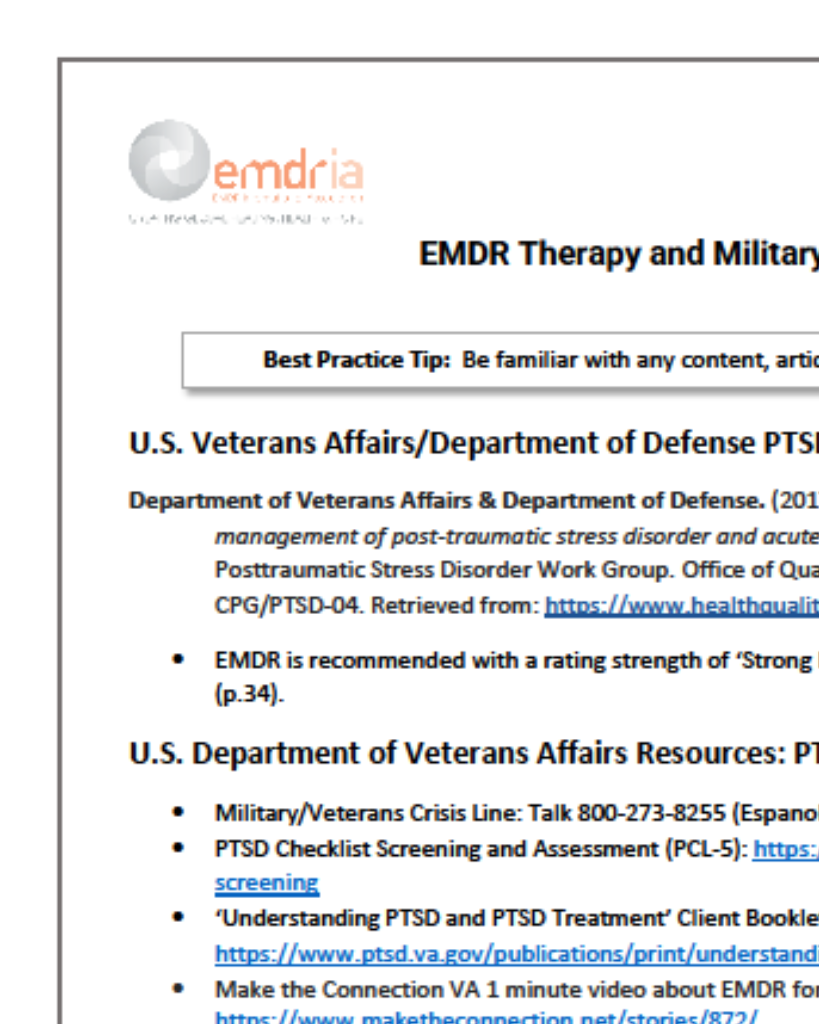
EMDR Therapy and Military Resource List

Read More

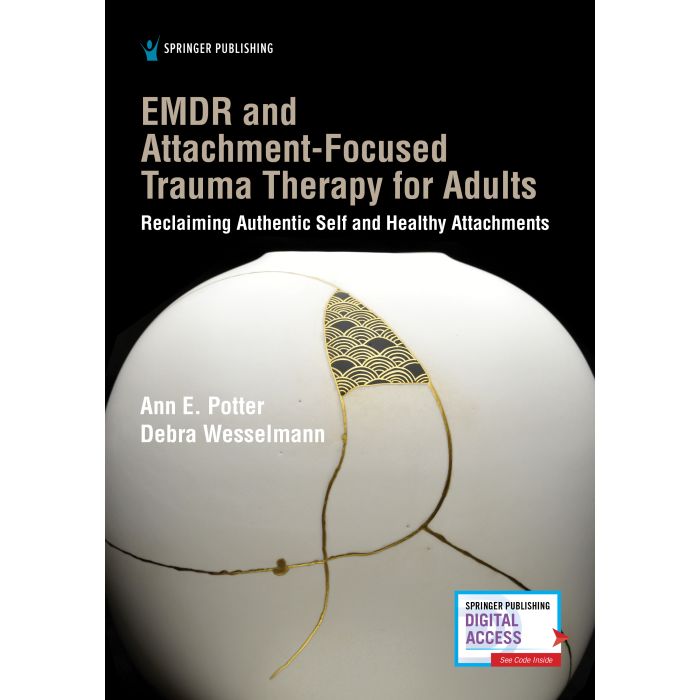
EMDR and Attachment-Focused Trauma Therapy for Adults: Reclaiming Authentic Self and Healthy Attachments (Springer, 2022)

Read More

Guidelines for Virtual EMDR Therapy: A Report of the Virtual Training and Therapy Task Group

Read More

Find an EMDR Therapist®

EMDRIAâ„¢ has more than 18,000 members trained to provide EMDR Therapy. Find a therapist near you.

Find an EMDR Therapist®
d2088683554149097441c3e1f6c13679941fbfdf (1)
EMDRIA

7000 N Mo Pac Expy
Ste 200
Austin, TX 78731-3013

info@emdria.org

512-451-5200

EMDRIA Facebook (opens in new tab) EMDRIA Twitter (opens in new tab) (opens in new tab) EMDRIA LinkedIn (opens in new tab) EMDRIA YouTube (opens in new tab) EMDRIA Online Community (opens in new tab)
  • About EMDR Therapy
  • EMDR Training and Education
  • EMDRIAâ„¢ Membership
  • Publications & Resources
  • EMDRIA Member Connect
  • EMDRIA Foundation
  • Privacy Policy
  • Copyright Policy
  • Accessibility Statement
  • Sitemap

© 1995-2026 EMDR International Association™. All rights reserved.

Website by Flipside Group

  • This field is for validation purposes and should be left unchanged.
  • This field is hidden when viewing the form
  • This field is hidden when viewing the form
  • This field is hidden when viewing the form
  • This field is hidden when viewing the form
  • This field is hidden when viewing the form
  • Disclaimer: This form is intended for initial contact with a therapist. Your message is submitted through the EMDRIA website and then sent to the therapist by email. Because email is not a secure method of communication, please consider limiting the amount of detailed personal, health, or confidential information you include in your initial message. Once you've established contact, you and the therapist can determine the most appropriate and secure way to communicate. Please be aware that email delivery cannot be guaranteed, and therapists manage their own inquiries and response times. Sending a message through this form does not guarantee that the therapist will receive, read, or respond to your inquiry. If a phone number is listed on the therapist's profile, you may wish to follow up by phone if you do not receive a response. If you are experiencing an emergency or are in immediate danger, do not use this form. Call 911 or go to your nearest emergency department.
We use cookies to ensure the best website experience. See our privacy policy to learn more.