Facilitating Effective Consultation Groups
A practical guide for EMDR consultants on facilitating effective consultation groups, with guidance on group dynamics, communication, ethics, confidentiality, and clinical focus.
Transcript
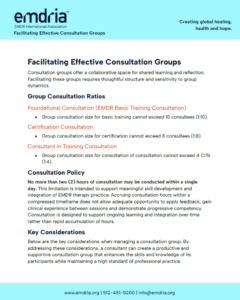
Facilitating Effective Consultation Groups
Consultation groups offer a collaborative space for shared learning and reflection. Facilitating these groups requires thoughtful structure and sensitivity to group dynamics.
Group Consultation Ratios
Foundational Consultation (EMDR Basic Training Consultation)
- Group consultation size for basic training cannot exceed 10 consultees (1:10).
Certification Consultation
- Group consultation size for certification cannot exceed 8 consultees (1:8).
Consultant in Training Consultation
- Group consultation size for consultation of consultation cannot exceed 4 CITs (1:4).
Consultation Policy
No more than two (2) hours of consultation may be conducted within a single day. This limitation is intended to support meaningful skill development and integration of EMDR therapy practice. Accruing consultation hours within a compressed timeframe does not allow adequate opportunity to apply feedback, gain clinical experience between sessions and demonstrate progressive competency. Consultation is designed to support ongoing learning and integration over time rather than rapid accumulation of hours.
Key Considerations
Below are the key considerations when managing a consultation group. By addressing these considerations, a consultant can create a productive and supportive consultation group that enhances the skills and knowledge of its participants while maintaining a high standard of professional practice.
1. Understand and Manage Group Dynamics
- Group Composition: Ensure the group consists of consultees with similar levels of experience or training to facilitate relevant and constructive discussions. If not, the consultant should be prepared to address a range of experience levels and therapeutic issues presented by group members.
- Group Goals: Set clear goals for the group and regularly assess progress toward these goals.
- Roles and Boundaries: Clearly define behaviors, norms, and roles within the group (e.g., consultant, consultees) and establish boundaries to maintain a professional and supportive environment.
- Address Conflicts: Be prepared to manage and resolve conflicts that may arise within the group, ensuring a respectful and supportive environment.
- Foster Inclusivity: Promote inclusivity and respect for diverse perspectives and approaches within the group.
2. Facilitate Effective Communication
- Structured Sessions: Plan and structure sessions. Ensure there is time for each consultee to contribute and set the expectation that everyone actively participates.
- Active Listening: Encourage active listening and respect for each consultee’s perspective, ensuring that each consultee has an opportunity to speak.
- Feedback to Consultee: Allow time to provide constructive feedback to each consultee and encourage consultees to offer feedback to one another in a respectful and supportive manner.
- Feedback from Consultee: Regularly solicit feedback from consultees on the effectiveness of the consultation group and make adjustments as needed. Customization of content and discussions should address the specific needs and goals of the group.
- Follow-up Support: Be available for follow-up questions or additional support outside of group sessions if needed or provide a plan about how to access this follow-up support.
3. Maintain Confidentiality
- Confidential Environment: Emphasize the importance of confidentiality regarding shared cases and personal experiences within the group.
- Ethical Guidelines: Adhere to ethical guidelines concerning confidentiality and discuss these guidelines at the start of the consultation group.
- Legal Requirements: Be aware of and comply with any legal requirements regarding consultation and client confidentiality.
4. Focus of Discussion
- EMDR Protocol: Ensure that discussions and case consultations stay centered on EMDR treatment.
- Current Practices: Stay updated on the latest research, resources, techniques, and updates in EMDR therapy to provide relevant and current guidance.
5. Provide Clinical Guidance
- Case Discussions: Offer expert guidance on complex cases and therapeutic challenges presented by consultees. Offer relevant resources, such as articles, books or research studies, to support participants’ learning and development.
- Skill Development: Focus on enhancing consultee’s EMDR skills and understanding through practical examples, role-playing and case studies.
6. Logistical Considerations
- Scheduling and Time Management: Schedule sessions at times that allow for regular attendance and for effective and individualized consultation time.
- Format: Decide on the format of the group (e.g., in-person, virtual) and ensure that all logistical aspects (e.g., technology for virtual meetings) are handled smoothly.
Related Resources