

Exploring the clinical applications and implications of EMDR therapy for PTSD in forensic settings: A systematic review (European Psychiatry)
The aim of this study is to conduct a systematic review, following PRISMA guidelines, to assess the efficacy and evidence supporting the use of EMDR therapy for PTSD within forensic settings

Intensive trauma treatment (Oxford University Press, 2025)
Intensive trauma treatment refers to a specialized, often structured, and focused approach to helping individuals who have experienced significant psychological trauma and meet diagnostic criteria for PTSD, complex PTSD, or borderline personality disorder.
EMDR therapy and phobias (Oxford University Press, 2025)
In this chapter, the evidence for using EMDR therapy for individuals with specific phobias is explored in addition to how specific phobias can be understood within the Adaptive Information Processing model.
EMDR therapy in a cultural, global context: Cultural adaptability (Oxford University Press, 2025)
This chapter discusses the cultural relevance and adaptability of EMDR therapy in a global, cultural context.
Yoga as a pre-treatment of EMDR to treat childhood abuse-related PTSD: Feasibility and pilot study (European Journal of Psychotraumatology)
This study aimed to test the efficacy of group yoga sessions followed by individual EMDR sessions on PTSD symptoms.
I feel pain, not pressure: A personal and methodological reflection on pain during cesarean delivery (American Journal of Obstetrics & Gynecology)
An experience-based article recounting pain during cesarean delivery, resulting PTSD, subsequent EMDR treatment, and a review of the evolution of cesarean delivery-based pain literature.
Successful treatment of secondary hypersomnia due to complex post-traumatic stress disorder with eye movement desensitization and reprocessing: A case report (Clocks & Seep)
This report explored the relationship between psychological trauma in complex PTSD and secondary hypersomnia, and clinical improvement after EMDR therapy in hypersomnolence and excessive daytime sleepiness (EDS).
Dual-task interventions reduce vividness and unpleasantness in both old and new memories (Behaviour Research and Therapy)
This study provides insight into memory consolidation, dual-task effectiveness and interventions, and EMDR.
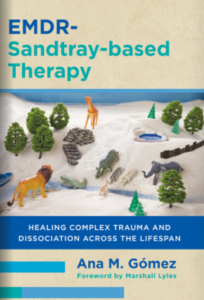
EMDR-Sandtray-based therapy healing complex trauma and dissociation across the lifespan (Norton, 2025)
A powerful, multimodal approach for trauma healing.
Symptom retention after successful intensive trauma-focused treatment for post-traumatic stress disorders (European Journal of Psychotraumatology)
The purpose of this study was to determine the extent of residual symptoms among those who no longer met PTSD diagnostic criteria after intensive trauma-focused treatment and at six-month follow-up.
Eye movement desensitisation and reprocessing as a potential treatment for substance use disorders: Study protocol (European Journal of Psychotraumatology)
This study aims to investigate the efficacy of EMDR in substance use disorder (SUD) patients with comorbid psychological trauma.
The relationship between changes in emotional intensity and treatment outcome in PTSD patients in EMDR therapy (European Journal of Psychotraumatology)
The purpose of this study was to determine the relationship between changes in emotional intensity of traumatic memories during EMDR therapy and treatment outcomes for PTSD.
