Types of Consultation
This resource outlines the different types of EMDR consultation and their distinct purposes across stages of professional development. It explains:
- Foundational Consultation (EMDR Basic Training)
- Certification Consultation
- Consultant in Training Consultation
- EMDR Case Consultation (Not for Credentialing Purposes)
Each section clarifies the purpose, process, goals and expectations involved, highlighting how consultation strengthens clinical competence, ethical practice, and effective application of EMDR therapy with clients.
Transcript
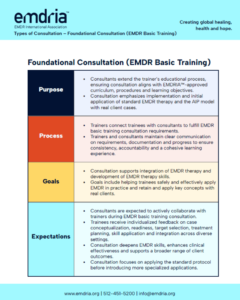
Foundational Consultation (EMDR Basic Training)
Purpose
- Consultants extend the trainer’s educational process, ensuring consultation aligns with EMDRIA™-approved curriculum, procedures and learning objectives.
- Consultation emphasizes implementation and initial application of standard EMDR therapy and the AIP model with real client cases.
Process
- Trainers connect trainees with consultants to fulfill EMDR basic training consultation requirements.
- Trainers and consultants maintain clear communication on requirements, documentation and progress to ensure consistency, accountability and a cohesive learning experience.
Goals
- Consultation supports integration of EMDR therapy and development of EMDR therapy skills.
- Goals include helping trainees safely and effectively apply EMDR in practice and retain and apply key concepts with real clients.
Expectations
- Consultants are expected to actively collaborate with trainers during EMDR basic training consultation.
- Trainees receive individualized feedback on case conceptualization, readiness, target selection, treatment planning, skill application and integration across diverse settings.
- Consultation deepens EMDR skills, enhances clinical effectiveness and supports a broader range of client outcomes.
- Consultation focuses on applying the standard protocol before introducing more specialized applications.
Certification Consultation
Purpose
- Consultation deepens competencies beyond basic training, supporting integration of EMDR across diverse, ethical and culturally responsive contexts.
- Hours emphasize proficiency and fidelity to the standard protocol, with appropriate modifications for safe and effective care.
- Feedback is based on consultee material, direct observation or recorded sessions.
Process
- Consultants work with certification applicants to complete consultation requirements for the EMDRIA Certified Therapist™ credential.
Goals
- Certification consultation is collaborative and instructional, aimed at enhancing EMDR proficiency.
- Consultants provide guidance and feedback to strengthen clinical decision-making and EMDR practice.
- Consultants support refinement of case conceptualization and application of EMDR with confidence, flexibility and integrity.
Expectations
- Consultation emphasizes ethical, effective EMDR application across diverse populations, integrating all eight phases and addressing clinical challenges.
- Video or live observation is preferred to assess skills and provide targeted EMDR feedback.
- When observation isn’t possible, alternatives include case presentations, transcripts, session summaries or reflective dialogue.
Consultant in Training Consultation
Purpose
- Consultation focuses on developing advanced skills, judgment and reflective capacity to guide other EMDR clinicians.
- Consultation emphasizes the CIT’s ability to provide consultation based on presented material, direct observation or recorded sessions.
Process
- Consultants mentor CITs in providing consultation, modeling effective feedback, ethical judgment and cultural humility.
- Consultation involves focused meetings to develop competencies required for the EMDRIA Approved Consultant™ credential.
Goals
- Consultation is collaborative and instructional, designed to enhance the CIT’s proficiency in EMDR consultation.
- Consultants provide guidance, feedback and support as consultation skills develop.
- Focus includes applying and analyzing information to strengthen consultation decision-making and adult learning support.
Expectations
- Consultation develops CIT knowledge, skills and attitudes to support deeper understanding of EMDR principles, build confidence and refine consultation skills.
- Video or live observation is preferred to assess skills and provide targeted EMDR feedback.
- When observation isn’t possible, alternatives include case presentations, transcripts, session summaries or reflective dialogue.
EMDR Case Consultation (Not for Credentialing Purposes)
Purpose
- Consultation addresses complex cases to ensure EMDR interventions are applied appropriately and effectively.
- This type of consultation is usually short-term and sporadic.
- This type of consultation does not count for reaching an EMDRIA™ credential.
Process
- Consultation occurs when clinicians meet to discuss case-specific interventions, presentations or situations to support EMDR application.
Goals
- EMDR case consultation aims to enhance clinician proficiency through collaborative feedback and recommendations.
Expectations
- EMDR case consultation is not a formal, structured process for the purposes of credentialing – expectations are set by individual clinicians who are working together.
Related Resources